
 Botulism, as an accidental illness, is rare these days. More sophisticated canning processes and better preservation of food products have prevented this serious neurotoxin from poisoning those in the modern world.
Intentional poisonings, however, are another story. The botulism toxin (called botulinum) is one of the most poisonous substances known to man. It is said to be 10,000 times more deadly than cyanide, and it’s been estimated that a lethal human dose is in the range of two nanograms. That translates to two billionths of a gram (think of a paperclip as weighing one gram). Therefore, deadly doses are not even visible to the naked eye.
There are seven types of botulism, but only three MAIN types. These are:
Food-Borne Botulism – This type of illness usually exhibits symptoms within four to 36 hours after ingesting a contaminated food product. The symptoms include dry mouth, difficulty speaking and swallowing, weakness of the facial muscles, blurred or double vision, drooping eyelids, as well as nausea and vomiting. Eventual respiratory shutdown and general muscle paralysis are the usual the causes of death. It’s good practice NOT to taste test food that may have gone bad.
Wound Botulism – This form of the disease is usually seen with those who inject drugs several times a day, as with people who use heroin. The symptoms and eventual lethal outcome are similar to food-borne botulism.
Infant Botulism – Babies who consume the spores of the bacteria will develop this form of the disease. The spores grow in infant intestines and release the neurotoxin. Honey can contain botulism spores and this is often a source of the disease for infants. Honey should not be fed to babies less than one year of age.
The botulism neurotoxin is produced mainly by Clostridium botulinum bacterium. The  neurotoxin is so lethal that it is listed as a potential biological weapon by the United States Department of Defense. Deliberate food-borne botulism has the potential to poison many of the population and is considered a public health risk.
Food-borne botulism is the form often used as a murder weapon and which has the potential to be used as a bio-weapon. The cause of death is usually from suffocation due to respiratory muscle paralysis.
In 2001, a civilian bio-defense group issued a consensus statement regarding the dangers of botulism. The Centers For Disease Control (CDC) has classified this toxin as a Category A Agent because of its potential as a biological agent and the fact that it can be used as either an aerosolized or food-borne weapon.
Botulinum spores are extremely hardy entities. They survive boiling temperatures for over three hours. They are resistant to ultra violet light, irradiation and alcohols. These spores are said to survive in the dry state for over 30 years and can be reactivated by heating them, so storage for future weapon use is not a problem.
The good news is that the spores may be killed by chlorine disinfectants. And about two years ago the FDA approved a botulism antitoxin drug, which is said to neutralize all seven known forms of the disease.
Survival depends on early initiation of treatment with the antitoxin, supportive medical care (such as breathing machine support and stomach pumping) and appropriate antibiotic use. But the recovery process can be lengthy, with assisted ventilation continuing for weeks and even months after the initial symptoms occur.
However, this same neurotoxin, when prepared in dilute concentrations, is used 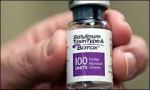 commercially to treat medical and cosmetic conditions. It amazes me, and even boggles my mind, that a substance with such destructive potential can be harnessed and used in beneficial ways.
Thoughts? Comments? I’d love to hear them!
 blood, and I’ve discovered yet another weapon that can be used when writing a bloodless death scene—Visine!
 The deed was discovered after the boyfriend visited his doctor several times complaining of chronic nausea and vomiting, as well as blood pressure and breathing issues. After traditional treatments failed, physician ordered a blood test and discovered an “extremely high level” of tetrahydrolozine in his blood. Eventually, the girlfriend admitted to spiking his drinking water with Visine.
 To prevent death,
  Some time ago I became fascinated with 3D printing technology. The idea of creating duplicates of an object from a blueprint reminded me of the replicator technology from Star Trek.
 both excellent medical uses, interesting new applications such as
  viable human organs. The development of the
  used to generate human cartilage, but one of the more recent developments is the use of this process to create skin from one’s own stem cells.
 ominous outcomes by using such technology. I can imagine that if 3D printing of skin becomes commonplace, our judicial system might no longer trust fingerprint technology to identify those involved in criminal activity. And, certainly, fingerprint security could no longer be trusted as foolproof.
 Therefore, the drug has many legitimate uses in modern society. In very small doses, the drug is quite effective in treating and preventing motion sickness and is often used as a trans-dermal patch for people traveling the high seas on those beautiful cruise ships. In a more clinical setting, scopolamine is used to prevent postoperative nausea and vomiting and to dry up respiratory mucus.
 Scopolamine patch in combination with other drugs and alcohol. Scopolamine is a CNS depressant and can cause confusion, hallucinations, delusions, rambling speech and paranoid behavior. When used in conjunction with other central nervous system depressants (such as tranquilizers, antidepressants, and sleeping pills), the
  might have no memory of what happened while under the influence. A traveler on a fashionable cruise ship might be embarrassed to learn the next morning that he or she was dancing on the tables the night before and being the life of the party.
 sickness, also prevent unwanted side effects from occurring by cutting down on alcohol, sleep medications and mood altering drugs. Discuss these possible drug interactions with your doctor before traveling.
 in the world, Devil’s Breath is a powerful drug being dealt with on the streets of Colombia, and now in major European cities.
 common tree in Colombia, which blooms with deceptively beautiful white and yellow flowers. The drug is said to be so powerful that within minutes of administration, people turn into zombie-like creatures. The victims remain coherent but become child-like and have no free will.
 capacity for rational thinking. The victim is turned into a complete mental zombie and the memory process of the brain is blocked.
 In fact, two of the characters who were presumed dead woke up the next morning and returned home—one from the morgue and another from a funeral home. Here’s the Amazon link if interested. It’s gotten mostly five-star reviews.
  Parts of the beautiful, flowering
  from Holland. This plant is commonly known by its three most popular varieties: the narcissus, the jonquil and the daffodil. All species of the narcissus plant family, however, contain a common deadly element–the poison lycorine.
 develop a stubborn dermatitis. The condition is called “daffodil itch” and the symptoms include dryness, skin cracking and fissures, scaling and extreme redness of the skin. There is also an accompanying thickening of the skin beneath the nails from exposure to the plant’s sap.
 England became seriously ill after a single daffodil bulb was added to soup by mistake during a cooking class.
 There’s nothing better than a memorable protagonist in any story, but the good guy in a murder mystery or thriller is the one who saves the day by solving the crime and bringing the perpetrator to justice.
 being driven by any combination of past experiences, emotional baggage, current likes/dislikes/frustrations and future expectations. We are driven by our past experiences and future possibilities, and so are our characters—none more so than our main character, the one driving the storyline.
 Primarily, those motivations come from a mix of external and internal changes that are either happening or will happen as the story progresses. Externally, the character must achieve something and be better off at the end of the story than at the beginning. It may be a newfound romance or even a change in job, but there must be some evolution to propel our readers through those written words to the last page.
 Tragedy happens all the time in the real world and it’s especially dramatic when it happens in a well-written novel. The protagonist MUST undergo an internal and external change for the reasons stated above, but those changes may well end in tragedy. In one of my past novels, the protagonist is dealing with a life-long struggle of achievement and acceptance, only to lose a prized possession in the end. This character is forever changed because of the loss, but it was necessary so that his life could progress in a certain way. So, even in adversity, there is progression in character development.
 There are so many nasty bacterial entities in the world that can disrupt our everyday lives and I often write about how some bacteria evolve into the superbug, treatment resistant types. Today, however, I’d like to share an interesting piece of
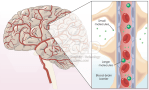 it difficult, if not impossible, to use drug-based treatments effectively to cross that barrier. However, these researchers have found an unlikely tool by genetically modifying Salmonella into a cancer seeking smart bomb that self-destructs inside tumors.
 because of the humanitarian efforts to eradicate lethal disease, but because of the potential to use such research in one of my thriller or murder mystery stories.
  Gates Foundation to partner with world leaders to tackle the next big viral epidemic.
 A final trial of an
  recently recognized in humans when it was first reported in Saudi Arabia in 2012. Since that time, it has spread to many other countries, including the United States. Symptoms include acute respiratory distress, fever, severe coughing and shortness of breath. The disease can be fatal.
 Viral diseases that have killed millions of people in the past have been eradicated thanks to the research, development and deployment of vaccines to prevent the spread of diseases shown in the chart to the left. (Information Chart via CDC. Image by Leon Farrant.)
 Copper sulfate is a fascinating substance that burns with a green to aquamarine colored flame. Often it’s used in high school chemistry classes to demonstrate just such a phenomenon. It’s also considered a “green chemical” in that the US agricultural industry has used copper sulfate in pesticides since 1956. It is approved for use even in organic farming.
 The chemical appears as a pale green powder, but when mixed in water it turns the liquid a bright blue—a telltale sign of the presence of copper sulfate.
 symptoms, but higher doses can be lethal. Acute liver failure is the primary result of severe poisoning.
 Prescription For Murder