
I often write about poisons and toxins that kill, but what better way to kill someone than with a substance that’s lethal but not so easy to detect.
Such scenes make for good fiction reading, but a devastating reality is the fact that normal foods can also kill.
Reports of contaminated foods being recalled because they contain lethal bacteria are in the news often when people become ill after consuming them. However, there’s another side to the story of lethal foods.
Food allergies cause minor, and sometimes severe or deadly, allergic reactions. In fact, the statistics are staggering. Food allergies affect over 15 million Americans, and every three minutes a food allergy sends an American citizen to the emergency room.
One in 13 children are included in this category—roughly two in an average American classroom—and nearly 40% of these children have already experienced a life-threatening food reaction, called anaphylaxis.
That means the reaction to the offending food caused a rapidly progressing allergic reaction that, if left untreated, would likely lead to death. The symptoms include rash development, a weak and rapid heartbeat, plummeting blood pressure, swelling in the oral mucosa, and a lethal closure of the airways.
Researchers tell us that the numbers of people with food allergies are increasing at a significant rate—an 18% jump in the decade between 1997 and 2007—and that peanut allergies have tripled in recent years.
 Regarding the rapid increase in peanut allergies, scientists theorize that roasted peanuts may be part of the problem. In other countries with lower rates of peanut allergies, peanuts are often boiled and children in those countries begin consuming the ground-up food at an early age—at a few months old rather than at three or four years old, like in America.
There are injections that can be given to desensitize a person to most environmental allergies—like cedar, oak, dog, cat, etc. But, like many insect allergies, there are no desensitizing injections that are available for food allergies.
Presently, studies are being conducted with children who are highly allergic to specific foods. Small quantities of the offending food are introduced, with progressively larger portions under controlled conditions, in an attempt to desensitize the child to the severe allergy. Although peanut allergies tend to be lifelong, there has been hopeful success in desensitizing children who develop allergic reactions after eating peanuts or peanut products. More good news is that about 20% of children with peanut allergies eventually outgrow them.
Besides peanuts, some of the more common causes of severe food allergies include shellfish, wheat, soy, milk and eggs.
Scientists don’t have definitive answers for why this spike is happening, but there are some viable theories. As America continues to become a “cleaner society”, our children are not exposed to the irritants that older generations encountered and adapted to as they progressed through childhood.
In 2012 a new organization was established to address the need for a cure of lethal food allergies. The organization is called Food Allergy Research and Education (FARE) and it was created from a merger between the Food Allergy and Anaphylaxis Network (FAAN) and the Food Allergy Initiative (FAI). FARE combines the expertise of FAAN’s food allergy information resources and programs with FAI’s large private source of funding for food allergy research.
The focus of FARE is increased awareness of this growing problem and the need for better education regarding the impact of food allergies. But, by combining advocacy at all levels of government with world-class research to advance treatment options, the evolution into finding cure options can begin.
Having lived through a severe and almost lethal allergic medication reaction when I was a child, I have personal knowledge that anaphylaxis is a frightening experience. It’s one that will stay with me for the rest of my life.
 When a severe food allergy leads to anaphylaxis in a child, the entire family is impacted. The best prevention is knowledge and preparation. To that end, every parent should go to Anaphylaxis 101 for a short education in food allergies, what symptoms to look for and what to do if a severe reaction should occur.
Thoughts? Comments? I’d love to hear them!
 follow and keep readers grounded as to which side each is on. The protagonist is the hero, the main character, the advocate or champion of a particular cause or ideal. The antagonist is the villain, the adversarial character to the hero, the one who actively opposes or is hostile to the hero and his or her cause.
 Ancient Greece, simple was boring! Characters were and are complex with good and bad traits, and it’s that complexity of character and personality that draws the reader, or draws in the viewer in the case of television or film, into the story to connect with the characters.
 Examples of antiheroes would include Wolverine from the X-Men, Walter White from Breaking Bad, Conan the Barbarian, and Severus Snape from Harry Potter. All of these characters differ from an antagonist because they are notable figures conspicuously lacking in heroic qualities but who ultimately decide to do the right thing. An antagonist (the villain) never decides to do the right thing and is usually (hopefully) defeated by the end of the story.
 the ointment, so to speak—but the antihero is the character that elicits sympathy and admiration from readers and viewers because they connect with antiheroes on a more personal level since antiheroes are conflicted characters with tragic flaws, as most of us are in real life from time to time.
 Whey, the tart liquid by-product when making cheese and yogurt, is
  from Sneem Co, Kerry, Ireland actually died in 1993 at the age of 48. Considered to be the world’s oldest cow, Bertha had given birth to 39 calves over her lifetime. To immortalize her memory, this special, hand-crafted gin was named in her memory.
 variety. In 2012, the world’s first milk vodka was distilled using whey as the main ingredient. And last year a Charleston, South Carolina distillery launched a line of alcoholic drinks made with whey and which included flavorings such as coconut, lime and grapefruit.
 The usual murder victims of women (up to 60%) are their significant others (a spouse, an ex-spouse or someone the murderer is dating), and women tend to use poisons or drugs that don’t produce violent side effects when they kill.
 injecting the victim with a lethal dose after the person is too intoxicated to fight back. Methanol and isopropyl alcohol (the kinds of alcohol used in rubbing and disinfectant alcohols) are the most lethal to inject. Ethylene glycol (a form of alcohol used in antifreeze) is a most effective poison when added to flavored drinks.
 hypnotic drug categories. The barbiturates include all the “…bital” drugs: secobarbital, pentobarbital and phenobarbital most notably. The benzodiazepines include Valium, Librium and Tranxene tranquilizer drugs.
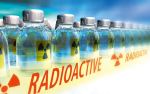 possible murder weapons to use in your murder mysteries and thrillers. There is another rather dramatic radioactive agent—a beneficial medication at that—which could take center stage in the development of your next lethal plot.
 selectively uptakes the drug into the body’s skeletal structure like it would calcium. Once administered, the drug is distributed throughout the body before it is absorbed into bones, where it remains.
 slight amber in color, and comes in 10-ml vials that must remain frozen until used. The drug expires (technically, its therapeutic half-life) within 48 hours after being removed from the freezer.
 In 184 BC, Hannibal’s warriors hurled pots of deadly viper snakes onto the decks of enemy ships. In the 1100s, bodies of plague and smallpox victims were thrown over the city walls of enemies; and in 1495, Spaniards offered the French wine spiked with leper’s blood. These are but a few examples of the many ancient biologicals used historically in warfare, not to mention the nerve gases developed and used by Germany during the First and Second World Wars.
 This interesting biological is a
  Most of the cases reported in the United States are due to consumption of illegally imported, unpasteurized dairy products (milk and cheese) from Mexico. Approximately 60% of human brucellosis cases in the US now occur in California and Texas.
 Milk?” I’ll remind myself to be assured that what I consume doesn’t have brucellosis riding along with it.
 Medical experts are increasingly concerned that today’s most powerful and most often used antibiotics are sometimes not effective against common infections of the urinary and respiratory tracts. They
  mutations happen in the bacteria genomes to allow them to withstand antibiotic attacks, and 2) bacteria become infected with small pieces of foreign DNA that carries a gene for antibiotic resistance (sort of like jumping from one bug to another).
 presently used to prevent such contamination in food products and to sanitize kitchen and bathroom surfaces, as well as being used in hand sanitizers. The abundant use of these once-effective antibiotics have allowed certain bacteria to develop resistance through mutations and DNA transference.
 “Water, water everywhere and not a drop to drink.” This quote from The Rhyme of the Ancient Mariner by English poet Samuel Taylor Coleridge came to mind recently while watching
  There are a couple of HABs that create the most havoc, but the most prevalent this year are Cyanobacteria (blue-green algae or pond scum).
 So water is not only the giver of life. It can also take away life when there’s toxic baggage dissolved in or floating on that water. Stay safe this summer and avoid those areas of the beach that seem unusually colorful.
 In previous blogs (
 hyperkalemia (too much potassium in the body) that can produce heart arrhythmias. Calcium gluconate is available as a sterile solution that’s given intravenously. It’s also used to counteract an overdose of Epson Salts (magnesium sulfate).
 The
The  feeding solutions for patients who could not tolerate oral nutrition. I had to make sure that the calcium gluconate and potassium phosphate solutions remained separated by mixing in the calcium gluconate solution as one of the FIRST ingredients and adding the potassium phosphate solution as one of the LAST ingredients so that each was dilute enough in the total mixture so as not to interact and form an insoluble complex that would harm my patients.
 contents, to high temperatures (such as in grilling and frying) cause the nitrites and amines in those foods to transform into nitrosamines. Bacon, hot dogs, other cured meats and certain cheeses that are preserved with nitrite pickling salt are prime sources of nitrites in our food supply. However, many vegetables also contain nitrites since nitrate and nitrite chemicals are found in the fertilizers used in farming.
 I say
I say  Prescription For Murder