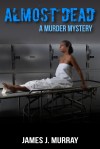
ALMOST DEAD – A Gift To My Readers

No, No, No . . . I don’t want my faithful readers almost dead. I want you very much alive and reading my novels!

Leathal Medicine CoverWhat I mean is that my new novel Almost Dead debuts today and my special gift to you is that the eBook is available as a FREE DOWNLOAD to you for a limited time.

My first blog of the new year centered on suggestions for creating an action-packed new year by 1) making realistic goals, 2) planning them logically, and 3) keeping yourself on track to meet those goals.

In 2016, my personal goals are to publish more novels that center on unique murder plots, involve interesting characters and contain story arcs with tantalizing twists.

Almost Dead is the first of two new novels I have coming out before summer and both do just that.

ALMOST DEAD is a short—snappy—unique—entertaining murder mystery. I’m so excited to share it with you that I want to offer it as a FREE EBOOK.

SYNOPSIS:

Detectives Rosie Young and Vince Mendez chase an elusive villain when not one but two victims turn up alive less than twenty-four hours after they are pronounced dead. The body count continues to climb as the detectives investigate how two seemingly unrelated victims share an almost identical near-death experience but have no memory of the event. The trail of evidence leads to startling revelations of deceit, greed and an international conspiracy in this entertaining murder mystery.

Genre: Thriller, Murder Mystery, Suspense (spoiler alert: not about zombies)

**********************************************************************

FOR A LIMITED TIME:Leathal Medicine Cover

ALMOST DEAD is FREE on all eBook Formats

╚═CLICK ON THE LINKS BELOW TO DOWNLOAD NOW═►

Amazon               B&N Nook

iBooks               Kobo               Smashwords

Posted in A Thriller Novel, About James J. Murray, Almost Dead, Blog Writers, Blogging, Drug Misadventures, Drugs For Murder Plots, Drugs Used For Murder, Free Book Downloads, James J. Murray, James J. Murray Blog, Murder Mayhem and Medicine, New Blog, New Book Is Published, New Book Release, New Free E-Book, New Murder Mystery Novel, New Novel Published, New Novel Release, New Publication, New Thriller To Download, Prescription For Murder Blog, The Art of Storytelling, The Science of Murder, Walking Dead in Writing | Tagged , , , , , , , , , , | 4 Comments

Transdermal Poisoning

One day last week I was talking to a doctor of physical therapy and he asked a most interesting question that I had to think about before attempting an answer.

THe said that he had a patient who could not take her oral pain medication because it upset her stomach and she asked him if she could crushed the tablet, mix in a hand cream and then apply it to the skin.

The patient wondered if the drug would be absorbed adequately for pain relief that way since commercial pain relief creams seemed to be popular with arthritic patients. He told her that he didn’t know if that would work but that he’d find out. He posed the question to me since I’m a pharmacist and he knew of several analgesic patches presently available that effectively deliver pain relief drugs through the skin.

Truly, I had never given much thought to a “do-it-yourself-at-home” drug delivery system such as that. Human skin has a barrier layer of stratum corneum (the outer-most part of the epidermis) that is lipid-rich and penetration of large drug molecules through that layer without expert preparation into a cream would be difficult.

For centuries, poultices, gels, ointments, creams and bath salts have been applied to skin for both cosmetic and health benefits. However, these types of applications are primarily intended for their topical effects with no regard to absorption through the skin’s barrier layers.

As a long distance runner, though, I often soak in a hot Epsom Salt bath (magnesium sulfate) to relieve the soreness in my tired, restless legs and believe that the magnesium absorbs to give a beneficial effect.

In the last couple of centuries, certain botanical medications were incorporated into emulsions (intricate water and oil mixtures that literally wrap water and oil molecules around each other) to create a delivery system that provided some systemic action if the drugs were adequately dissolved in the water or oil before the emulsion was compounded.

The idea of a topical drug delivery system has been expanded by the modernimages-4 pharmaceutical industry and transdermal technology to deliver drugs into the body is a reality today.

Transdermal patches now deliver a wide variety of medications: male and female hormone therapy, both narcotic and non-narcotic pain relieving drugs, contraceptives, motion sickness drugs, smoking cessations drugs, and even medications for Parkinson’s disease.

The first transdermal drug patch was launched in 1979, and presently about 20 drugs are available in transdermal drug patch therapies.

The technology has limitations, however, in that the drug to be absorbed from the patches must be of a particularly small molecule size, they must be soluble in oils and be therapeutically effective in low doses. At one time, research teams attempted to administer insulin to diabetics in this manner, but the insulin molecule is too large to penetrate the skin’s barrier layers.

So the ultimate answer to this patient’s question about crushing and mixing her pain medication into a hand cream would not work well since the pure drug would need to be dissolved into the basic emulsion components (the water, the oil, or a chemical emulsion compound) before actually making the cream. The same principle would apply to an ointment, gel or lotion.

images-2I also joked with my physical therapist friend about using such transdermal technology to poison someone. Although I’ve blogged in the past about several poison compounds that absorb readily through the skin, adulteration of transdermal patch technology was one specific method of murder I had not considered.

Contaminating a drug patch with a poison to either acutely or chronically poison a victim is certainly possible. People have been murdered with various drug patch medications via overdosing on nicotine patches or fentanyl narcotic patches by applying several at a time.

It’s conceivable that someone could discreetly inject a poison into a prescription drug patch to kill a victim. The poison, however, would have to be lethal in minute quantities to do this effectively and have the ability to be absorbed through the skin. I think the concept would make for an interesting and unique murder weapon.

The possible poisons that could taint a prescription drug patch in this way might include anthrax, polonium, various snake and insect venoms, jellyfish and fugu compounds, botulin and various heavy metals (such as dimethyl mercury), and various liquid nerve agents.

There are new transdermal technologies on the horizon that would make transdermalimages-1 poisoning even more conceivable. Second-generation transdermal technology uses micro-ultrasound systems to increase skin permeability and iontophoresis (breaking down a drug molecule into its ion components) to increase absorption rates of drugs.

Third-generation transdermal technology includes thermal ablation (outer layer tissue destruction with micro-bursts of heat) and micro-needles imbedded into transdermal patches to not only increase absorption rates, but also to include classes of drugs (or poisons) previously unable to be absorbed through the skin with traditional drug patch technology.

These enhanced transdermal options increase the potential of drug patch technology being used as dramatic alternatives to oral delivery and hypodermic injections as a method of poisoning the villain in your next thriller.

Thoughts? Comments? I’d love to hear them!

Posted in A How To Blog on Murder Plot Ideas, A How To Blog on Murder Weapons, About Medications/Pharmacy, About Murder, All About Murder, Blog Writers, Blogging, Bloodless Death Scene Writing, Chemical Poisons, Chemicals Used For Murder, Choosing How a Character Should Die in a Story, Contact Poisons, Designing Murder Plots, Developing Storyline Ideas, Dramatic Murder Weapons, Drug Patches For Murder, Drugs For Murder Plots, Drugs Used For Murder, How to Choose a Murder Weapon for a Plot Idea, Ideas for Murder Scenes, Instruments of Death, James J. Murray Blog, Killing Off Characters in Writing, Killing Off Characters in Your Novel, Lethal Agents and Murder, Making Your Own Topical Drug Therapy, Murder Mayhem and Medicine, Murder Weapons Discussed, New Blog, New Methods of Murder, New Methods To Kill Characters in Your Novel, Plotting Murder Scenes, Poisons in Transdermal Patch Therapy, Poisons Used For Murder, Prescription For Murder Blog, The Science of Murder, Tools of Murder, Transdermal Patch Therapy, Unique Murder Plots, Unique Murder Weapons, Ways to Murder, Writing Death Scenes, Writing Dramatic Murder Scenes | Tagged , , , , , , , , , , , , , , | 8 Comments

COPPER SULFATE – The Green Chemical

copper-sulfate-flameCopper sulfate is a fascinating substance that burns with a green to aquamarine colored flame. Often it’s used in high school chemistry classes to demonstrate just such a phenomenon. It’s also considered a “green chemical” in that the US agricultural industry has used copper sulfate in pesticides since 1956. It is approved for use even in organic farming.

The copper in copper sulfate binds to proteins in bacteria, fungi and algae. It damages their cells, causing the organism’s cells to leak and die. Copper sulfate especially inhibits the growth of Esherichia coli. E. coli is an aggressive bacterium that is often the source of96599-382x255-Japanese_Farmer contamination in commercially grown produce.

Agricultural products containing copper sulfate are available in liquids, dusts and crystals. Copper sulfate can be toxic—and even lethal—if large amounts are absorbed through the skin. Accidental poisoning with this chemical has been reported occasionally among farm workers.

Workers can be exposed to the chemical as it comes into contact with skin. The dust can be breathed in, or the accidental contamination of food or drink can occur. That’s an interesting idea for the genesis of a murder mystery or thriller plot!

images-2The chemical appears as a pale green powder, but when mixed in water it turns the liquid a bright blue—a telltale sign of the presence of copper sulfate.

Although copper is an essential element and required by the body for proper health, the human body has internal mechanisms to maintain proper copper equilibrium. Excess copper is not stored in the body but excreted in solid wastes. The body cannot handle sudden large doses of the chemical, however. It overwhelms the body’s defense mechanisms, resulting in tissue damage or even death.

As with most toxic chemicals, the degree of harm is proportionate to the dose. Smaller doses of copper sulfate cause nausea and vomiting, loss of appetite, shock and diarrhea. Larger doses can lead to tissue damage, destruction of blood cells and moderate to severe damage to the liver and kidneys. Lethal doses result in multi-organ failure resulting from the chemical binding to proteins in different organs.

An ingested dose of 15-20mg of copper sulfate causes mainly gastrointestinalimages-3 symptoms, but higher doses can be lethal. Acute liver failure is the primary result of severe poisoning.

Accidental poisonings occasionally happen in the agricultural industry, but fortunately they have been on the decline with better education regarding safe handling of the chemical. Copper sulfate ingestion is also rare, and mainly is limited to the Indian subcontinent. This chemical is easily found in Sri Lanka and sold over the counter in that area of the world. Burning of copper sulfate in houses and shops as good luck charms or for religious activities has been a common practice among local Buddhists and Hindus.

The colorful flames from burning the hydrated crystals are attractive to children and a source of inadvertent ingestion and poisoning. The chemical is also commonly used there in pesticides, in the leather-making industry and for making homemade glue.

For an interesting poison in your next murder mystery, copper sulfate might be the perfect chemical weapon. It’s easy to use, readily available on the Internet and particularly lethal in sufficient quantities.

Thoughts? Comments? I’d love to hear them!

*******************************************

Leathal Medicine CoverCOMING SOON!

I have a new murder mystery novel publishing later this month. The release date is almost here, but I’m too excited to keep this under wraps any longer. I’ll let you know when, where, and how to get your copy FREE in my next couple of blogs.

Posted in A How To Blog on Murder Plot Ideas, A How To Blog on Murder Weapons, About James J. Murray, About Medications/Pharmacy, About Murder, Acute Poisons, All About Murder, Blog About Poisons in Fiction Writing, Blog Writers, Blogging, Bloodless Death Scenes, Chemical Poisons, Copper Culfate, Copper Sulfate Poisoning and Farm Workers, Copper Sulfate Poisoning and India, Ideas for Murder Scenes, Instruments of Death, Interesting Murder Weapons, James J. Murray Blog, Killing a Villain in a Novel, Lethal Chemicals in Murder Mysteries, Methods of Murder, Murder Weapons Discussed, New Blog, New Methods of Murder, New Methods To Kill Characters in Your Novel, Pesticides and Murder, Poisons and Murder, Poisons Used For Murder, Prescription For Murder Blog, The Green Chemical, The Writings of James J. Murray, Unique Murder Plots, Unique Murder Weapons, Ways to Murder, Writing Death Scenes | Tagged , , , , , , , , , , , , , , , , , , , , , , , , , , | 2 Comments

Create An Action-Packed New Year!

Before you roll your eyes at yet another lesson about New Year’s resolutions, here are some practical suggestions to help you 1) make realistic goals, 2) plan them logically, and 3) keep yourself on track to meet those goals.

MH900438811First and foremost, take a deep breath and smile! It’s a new year—all fresh and new, and filled with potential. Whatever unfulfilled dreams you had last year is history. Leave them behind and don’t look back.

It’s time to focus on what you want and need to do going forward. And forget about calling them New Year’s Resolutions. It’s a worn out phrase that’s often linked to failure.

Instead, whatever changes you want to achieve should be called New Life Goals. Each New Year is a golden opportunity to make meaningful changes to create a better life. If you’ve read the bio on my website, you’ll know that I’ve had several opportunities to recreate myself. With each one, I’ve had to achieve specific life-changing goals.

From those experiences, I’ve learned that deciding on the right New Life Goals can be aMH900430599 daunting experience. You may have one BIG change you wish to make or you may have many small adjustments you’d like to incorporate into your life. The principles of change are the same for both: Plan, Execute, Evaluate, Adjust and Repeat.

*The key word here is REPEAT!*

In order for meaningful change to happen, you must make that change a habit. If it’s a physical change you wish to make, you must get your body used to whatever you want it to do. I’ll use myself as an example. When I’m not writing, I’m passionate about long distance running. I love the sport so much that I became a certified running coach in mid-2013 and now volunteer my time training others to become better runners.

In training runners, we use training cycles to achieve specific goals, such as running faster or longer distances. We achieve those goals in progressive cycles—called the Microcycle, the Mesocycle and the Macrocycle. But these same principles can apply to other endeavors in your life—no matter whether they are physical or mental changes.

The Microcycle is that initial 5-7 day period when you push yourself to begin that one thing you want to make a part of your life. This is the Planning and Executing part of change.

42-15622535In running, this is when you actually start training regularly on a track or trail. If you want to lose weight, this is when you start passing up dessert and/or join a health club. If you want to improve your outlook on life, this is when you begin to smile more and attempt to interact better with others. In short, you plan what you want to do and then do it.

The next cycle, the Mesocycle, is a longer period, usually a minimum of three weeks and up to ten weeks. This is the cycle where you attempt to make the change a HABIT. In order for something to become a permanent part of our lives, we must make that thing a routine. We have to make it become so much a part of us that we would miss it if it no longer existed in our lives.

This is where you evaluate how the change fits into your life and where you make smallMH900400498 adjustments to continue the momentum to achieve that goal. If you want to eat less, stop going out to restaurants and control portions. If you have trouble finding time to go to a health club or scheduling a run, get up earlier or give up evening television.

Adjust your life to achieve your goal rather than adjusting your goal. Create a new habit and repeat that as often as possible to make it a part of your life.

The Mesocycle is where you begin to embrace the change to achieve your goal. This is where the runner begins to enjoy the run and the dieter begins to dislike unhealthy foods. The longer you consciously think about what you are changing, the more successful you’ll be.

The last cycle is the Macrocycle and it’s the finishing touch that allows you to own your goals permanently. It can extend for months, years or for life. If you’re trying to lose weight and you achieve that goal, this is where you keep the momentum going to maintain that new weight. If you’re trying to improve a relationship with someone, you don’t stop the process when you feel good about each other. You continue to work at the relationship. You continue to repeat whatever you did to achieve a better relationship, or to maintain whatever specific goal you’ve identified.

MH900423646Meaningful changes in your life happen by identifying goals, incorporating them into your life and making that specific change a habit—and it’s a continual process. And keeping the momentum going in the Macrocycle is as important as that initial Microcycle step to identify the new goal.

If you’ve identified multiple goals for 2016, you’ve created an extra challenge for yourself. You can achieve all of your goals, but you simply have to work on one before starting another. Prioritize each goal and tackle them one at a time.

Attempting to achieve multiple goals at once can be overwhelming and it sets you up for failure. Achieving meaningful change takes focus. Don’t dilute your effectiveness by focusing on several changes at once.

The important thing to remember is that this is a New Year. The slate is totally clean and you have all year to achieve the goals you’ve identified.

Tackle the one goal that’s most important to you first. Attack it with gusto! Achieve it! Own it! Then move on to the next most important goal. Make them part of your bucket list for 2016!

Thoughts? Comments? I’d love to hear them!

Posted in A New Year's Greeting, A New Year's Wish, About James J. Murray, About Running, About Writing, Achieving Perfection, Blog Writers, Blogging, Change in the New Year, Changing Your Life in The New Year, Create a Better You, Creating New Habits in The New Year, Developing Better Life Skills, Forging a Better Life, Growing As A Writer, Happy New Year, How To Change Bad Habits, How to Create a Better Life, How to Create a More Enjoyable Life, How to Create a More Productive Life, How to Create a More Satisfying Life, How to Implement New Year's Resolutions, How to Make New Year's Resolutions, Ideas for Creating Permanent Change, Life Skills, Making Change Permanent, Mastering Your Craft, Meaningful Change in The New Year, Modern Approach to New Year's Resolutions, New Blog, New Life Goals, New Year's Resolutions, Prescription For Murder Blog, Skills to Create a Better Life, The Writings of James J. Murray | Tagged , , , , , , , , , , , , , , , , , , , , , , , , , , , , , | 3 Comments

MY NEW YEAR’S WISH FOR YOU!

New-Year-Eve-10

** MY WISH FOR YOU IN THE NEW YEAR **

May peace break into your home;

May thieves steal your debts;

May the pockets of your jeans

become magnets for $100 bills.

May love stick to you like glue;

May laughter assault your lips.

May happiness spread across your face;

May your tears be that of joy;

May the problems you had this past year

forget your address.

In short . . .

May 2016 be the BEST YEAR OF YOUR LIFE!

MH900092641

To You and Yours!!

Posted in A Holiday Wish, A New Year's Greeting, A New Year's Poem, About James J. Murray, Happy Holidays, Happy New Year | Tagged , , , , , , , | 1 Comment

Wishing You A Joyous Winter Holiday!

seasons-greetings2

Happy Holidays To All My Readers

&

May You and Yours Be Filled

With Joy and Peace

During This Holiday Season


Posted in A Christmas Greeting, A Holiday Wish, A World of Joy, About James J. Murray, Happy Holidays, James J. Murray, James J. Murray Blog, New Blog | Tagged , , , , , , , | Leave a comment

PROLOGUES – To Use or Not To Use!

prologue3Fiction writers often use prologues to set up their story—possibly with an actual murder scene or with a scene that gives valuable historical information to help the reader understand the villain or hero. But are these preambles to the real story actually necessary?

Some literary experts even question whether the prologue is truly part of the novel. And if it’s not, then why use one? Does a prologue even begin the novel or is it simply a bunch of background that can be filtered in throughout the story—or can a prologue even be ignored in some stories without losing any of the tale’s richness?

About two years ago, I posted a blog that questioned the need for a prologue in modern fiction writing by asking my readers those same questions. Imagine my dismay when I dusted off the completed draft of my next novel (that I wrote a couple of years ago) and realized that the first chapter—and possibly the second chapter also—was a cleverly disguised prologue.

I questioned why I had even included those first two chapters in the novel and the only MH900411777truthful answer was that I wanted the reader to understand what motivated my protagonist to act a certain way in Chapter Three.

As I reread the first several chapters, I knew that my first editing chore was to create a better Chapter Three so that there would be no need for the first two chapters, and that is exactly what I’m doing. My old Chapter Three is now a better-written Chapter One.

So again I question the need for a prologue—either cleverly disguised as an opening chapter or overtly labeled as a prologue.

It’s generally said that readers often skip a prologue because so many writers misuse them—as I did in my first draft. Hints that a writer may be misusing a prologue as a literary device include the following:

If the only purpose for your prologue is to excite and “hook” the reader, then it’s a misuse of this tool. There must be a proper “hook” at the beginning of your first chapter (where many readers actually start reading your book) to actually interest the reader.

If your prologue has nothing to do with the main story plot, then those pages are a waste of words. If you can cut the prologue from your story and that action does not affect the story arc or its outcome, then it’s not necessary and should be deleted during your edits.

If your prologue is long, then maybe the prologue is simply masquerading as your first chapter. Prologues, when they’re considered necessary, should be short and to the point.

If your prologue becomes an “info dump”, then I suggest taking a course in plot development. Before beginning the story, the writer must first envision the MH900448290beginning, the middle and the ending of the story in broad strokes to understand the overall plot development. A writer must keep track of key details in the plot and slowly allow them to unfold. Dumping massive amounts of background at once is never a good idea. When it’s disguised as a prologue, it confuses, disorients and frustrates readers before they have a chance to become invested in your story.

If your prologue is there to set the mood or give reference to the story setting, then it’s unnecessary. Why is that? It’s because you’ll have to set the mood of the story in your first chapter anyway, and you’ll want to re-build the characters’ worlds when they appear later in the story. Therefore, such a prologue is redundant and a waste of words. The information that sets the mood and introduces your characters should be unfolded only as needed to anchor the reader with the information required to move your story forward.

So now you may question if there is EVER a need for a prologue or if it’s a thing of the past to be avoided like a literary plague.

Genre has a lot to do with whether you use a prologue in your writing. Thrillers and mysteries are specific genres where a prologue might work well—and I emphasize the word MIGHT.

If your protagonist is to do battle with an old enemy, a prologue might set the stage for the6619-wheelman-action-scene thrilling chase about to evolve. If your protagonist is to solve a crime that’s linked to some past action, a prologue might be necessary to provide valuable information regarding those past events.

The key in either of these situations is to keep the prologue brief and to the point. Reveal too much too soon, or go into great detail, and your reader won’t be intrigued enough to continue reading.

My best advice is to be cautious of the prologue—it can truly make or break the mood of the story you are weaving for your reader.

Thoughts? Comments? I’d love to hear them!

Posted in About James J. Murray, About Writing, Accuracy in Editing, Accuracy in Writing, Achieving Writing Perfection, All About Writing, Better Fiction Writing, Blog Writers, Blogging, Correct Use of Prologues, Death of The Prologue?, Developing Better Writing Skills, Developing Story Arcs, Developing Story Plots, Developing Storyline Ideas, Developing Writing Skills, Growing As A Writer, How to Use Prologues, James J. Murray, James J. Murray Blog, Learning the Art of Writing, Mastering Your Craft, Misuse of Prologues, New Blog, Obsession with Proper Usage of the English Language, Prescription For Murder Blog, Prologue Use and Misuse, Prologues, Prologues in Modern Fiction Writing, Proper Use of Prologues, Proper Use of the Written Word, Role of The Prologue, Story Development, The Art of Storytelling, The Art of Writing, Tools of Fiction Writing, Use of Prologues, When Not to Use Prologues, Why Use Prologues | Tagged , , , , , , , , , , , , , , , , , , , , , , , , , , , , , , | 9 Comments

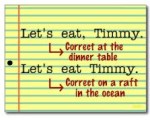
Commas, Em Dashes, and Ellipses—Their Proper Use!

images-3In a recent blog I discussed how to properly use the three types of dashes in writing.

Today, I’d like to further the discussion on punctuation marks used specifically to clarify or to emphasize a point. They are the comma, the Em dash and the ellipsis (the plural being “ellipses”). Sometimes these three punctuation types are used interchangeably in modern writing, both in dialogue and narration, but there are specific rules for their use.

The question I present is this. Is their use solely at the discretion of the writer . . . or should the precise rules of language be followed? Let’s take a closer look at the three punctuation marks in question before forming any conclusions.

The Comma: The comma is used to separate elements within a sentence. It’s often said that anytime the writer intends the reader to break for a breath, that’s where a comma images-1should be placed. But people breathe at different times when reading the same sentences, so that rule doesn’t hold up. For today’s discussion, a comma is used to separate phrases that intend to clarify previous words (such as, “He was a handsome fellow, with hair the color of gold.”).

But the comma often does not create the emphasis or drama that a writer wants to convey, and that’s where the next two punctuation marks can be used more effectively.

The Em Dash: Most grammatical rulebooks indicate that the em dash is used as an interruption in dialogue or to emphasize a phrase in both dialogue and narration. It’s a MH900441734much stronger punctuation mark than the comma but less formal than a colon, and it’s a more relaxed form of punctuation than the more technical use of a set of parentheses to explain or emphasize a specific point (such as, “He was a handsome fellow—with hair the color of gold that shimmered like the setting sun.”).

The em dash creates more drama and can be used as a strong aside in narrative (such as, “He was a handsome fellow—with god-like golden hair that turned every eye in a room he entered.”), or used for dramatic interruption of speech (such as, “He was a handsome fellow—I’m sorry, I know talking about him makes you feel uncomfortable.”). For a more in depth description of em dashes, please refer to my recent blog on the types of dashes.

The Ellipsis: The use of ellipses (plural of ellipsis) denotes a small pause (“He was a handsome fellow . . . with great hair.”), a stutter (“This guy was . . . so . . . so handsome.”) or for dialogue and narrative that trails off (“When this guy walked in that room, it was like everyone turned and . . .”).

Some of the most heated discussions that writers have involve the distinction and proper use of em dashes vs ellipses, but the rules are quite clear. Ellipses are reserved for when the writer wants the reader to momentarily pause or for phrases that trail off. The complete thought, whether it is dialogue or narration, is not stated but the meaning is understood never the less.

An ellipsis is always three dots, no more and no less. Style guidelines vary as toimages-2 whether or not to use an ending period if the ellipsis comes at the end of a sentence. Most guidelines are satisfied with no final period.

And there is an on-going discussion as to specifically how ellipses are presented, depending on if the writer follows the Associated Press (AP) style or the Chicago style.

The AP style of ellipsis consists of three non-spaced periods, with a space before and after (“He was a handsome fellow … with such golden hair.”). The AP style often is referred to as a closed ellipsis. This contrasts to the Chicago style that presents as three spaced periods, with spacing before and after (“He was a handsome fellow . . . with such golden hair.”).

And then there’s the complication that arises in modern literature where we’re seeing more use of the AP style without the spacing before and after (“He was a handsome fellow…with such golden hair.”), but the rules in both the AP and Chicago styles are clear about using spacing before and after the three-dot ellipsis.

CB043676Grammatical rules assure that uniform guidelines are followed so that the reader’s experience is all about focusing on the story rather than about negotiating unique writing styles. I should point out, however, that many writers have been successful with unique styles of writing.

Although there may be established sentence structure rules, individual styles of writing sometimes preclude the rules. Above all, a GREAT WRITER is consistent with punctuation to enhance the reader’s experience and to avoid unnecessary grammatical distractions.

Thoughts? Comments? I’d love to hear them!

Posted in About James J. Murray, About Writing, Accuracy in Editing, Accuracy in Writing, Achieving Perfection, All About Writing, AP Style of Ellipsis, Blog Writers, Blogging, Chicago Style of Ellipsis, Comma Use, Correct Use of Punctuation in Fiction Writing, Developing Better Writing Skills, Developing Writing Skills, Difference Between Commas, Ellipses Use, Ellipsis Use, Em Dash Use, Em Dashes and Ellipses, Growing As A Writer, Halon Gas and Murder, How to Use Commas Properly, How To Use Ellipses Properly, How to Use Em Dashes Properly, James J. Murray, James J. Murray Blog, Learning the Art of Writing, Mastering Your Craft, New Blog, Obsession with Proper Usage of the English Language, Prescription For Murder Blog, Proper Punctuation in Writing, Proper use of Commas, Proper Use of the Written Word, Punctuation Marks, Punctuation Rules, Rules of Punctuation, The Art of Writing, Tools of Fiction Writing, Writing Skills, Writing Techniques | Tagged , , , , , , , , , , , , , , , , , , , , , , , , , , , , , , , , , , | 3 Comments

Mad About Mushrooms

The general term “mushrooms” includes a wide variety of fungal plants. They typicallyimages-1 have a domed cap on a stalk and many have gills on the underside of the cap.

Among the various mushroom species, many are considered nutritious and beneficial to the human diet. Several varieties, however, have interesting hallucinogenic and even lethal properties that could be of interest to the murder mystery writer. The term “toadstool” is often reserved for the inedible or poisonous varieties.

imagesOne of the most popular varieties of mushroom that falls under the general category of “interesting but lethal” is the toadstool Amanita muscaria, commonly known as the fly agaric or fly amanita. It is considered a poisonous plant, but its beauty and psychoactive components often tempt adventurous people to consume it.

The Amanita muscaria is one of the most easily recognized of the poisonous mushrooms—a large white-gilled, white-spotted red mushroom. Although the toadstool can be lethal if eaten fresh and raw, parboiling the plant weakens its toxicity and releases the hallucinogenic substance muscimol trapped within.

This alluring toadstool has interesting folklore attached to it. The mushroom is p19alcg3fo1cvar291g1jnf4j2s3the hallucinatory ‘shroom responsible for Alice’s trip in Wonderland and there are interesting tales of this plant used as a traditional symbol of yuletide happiness in Central Europe, Russia and Scandinavia for many centuries—calling the plant “a red light shining bright in the winter darkness.” Images of a red-suited Santa Claus and his flying reindeer are often attributed to the high—described as a “roaring drunk”—produced when this mushroom was boiled and the remaining pot liquid used as a holiday drink.

Native throughout the temperate regions of the Northern Hemisphere, this lethal plant has been unintentionally introduced to many countries in the Southern Hemisphere as they were carried along with pine and birch trees for developing plantations in these southern regions.

The deadly outcomes from consuming this plant are certainly dependent on how much is eaten and if the plant has been boiled first to weaken the muscimol toxin. If used properly in your murder mystery plot, this plant can be an effective and stealthy killer.

Once the raw plant has been ingested, low blood sugar and degenerative changes in the body’s organs develop—particularly weakening the kidney, liver and heart muscles. The symptoms are slow to develop (usually six to fifteen hours after ingestion and sometimes as much as forty-eight hours). An unsuspecting victim might not only consume a fully lethal dose, but this person wouldn’t know anything is wrong or seek medical attention until it’s too late.

The initial symptoms of Amanita muscaria mushroom poisoning are mild but Amanita muscaria redrapidly build into severe stomach pains, violent vomiting, intense thirst and bloody diarrhea. An interesting point to note is that the victim will remain conscious almost to the end before finally lapsing into a coma and dying—allowing the writer to compose dramatic and entertaining murder scenes.

From a medical standpoint, life support measures may keep the person alive for an additional period of time, but the damage to the liver is so severe and irreversible that the only sure way to save a victim is with a full liver transplant.

So for a mind-blowing yuletide holiday high, a properly prepared Amanita muscaria tonic may be just the thing; but for a one-way trip to the morgue, use the plant in its natural state for creating a stunningly spectacular murder scene.

Thoughts? Comments? I’d love to hear them!

Posted in A How To Blog on Murder Plot Ideas, A How To Blog on Murder Weapons, About James J. Murray, About Murder, About Writing, All About Murder, Amanita Muscaria Mushrooms, Blog Writers, Blogging, Bloodless Death Scene Writing, Botanical Murder Weapons, Botanicals That Kill, Deadly Mushrooms, Deadly Plant Poisons, Designing Murder Plots, Dramatic Murder Weapons, Drug Poisoning, Ideas for Murder Scenes, James J. Murray, James J. Murray Blog, Killing With Poisonous Plants, Lethal Mushrooms, Methods of Murder, Murder Mayhem and Medicine, Murder Weapons Discussed, Murder With Poisonous Plants, Muscimol, New Blog, New Methods of Murder, Plant Poisons, Plants That Kill, Plants Used For Murder, Plotting Interesting Murder Scenes, Poisonous Mushrooms, Poisonous Plants, Poisonous Toadstools, Poisons and Murder, Poisons Used to Murder, Prescription For Murder Blog, Tools of Murder, Unique Murder Weapons, Ways to Murder, Writing Dramatic Murder Scenes | Tagged , , , , , , , , , , , , , , , , , , , , , , , , , | 5 Comments

Why A Writer Should Be Thankful!

Here in the United States it’s Thanksgiving time—Thursday, November 26th to be exactthanksgiving-dinner—and it’s a day of fantastic food feasts, with the bonus of a long holiday weekend ahead.

More importantly, it’s a time to reflect on what makes our lives so special and rewarding and what makes us thankful when we think back on the current year and the events that have shaped our lives in the recent past.

As my life has evolved from a clinical pharmacist into the world of writing fiction, I’ve come to realize how special and rewarding it is to be an author.

Although there are challenges in each and every endeavor we attempt and with each life thank-you-quotesdecision we make, writing has been most rewarding for me in many ways. A few of the “special perks” of being a writer, and the ones for which I am most thankful for, include:

(1) My Life Experiences: We all have life experiences from which we draw on in our daily lives, but a writer has the special privilege of being able to share some of those experiences with readers and, especially as a fiction author, I shape those experiences in special, entertaining ways. It’s those life experiences that help develop my story plots, refine my character developments and influence the dialogue I write. I’m thankful every day for new experiences that help me become a more creative writer.

(2) I’m Allowed To Fantasize As Much As I Want: Writing is one of the few professions where it’s totally acceptable to live in a fantasy world and still not be Johnny-Depp-Crazy-Headconsidered mentally unstable. I love that I can have imaginary friends (my characters) and can communicate with them anytime I want. I’m thankful that I escape reality on a regular basis and still have those around me think that’s perfectly normal.

(3) I Can Be As Manipulative As I Want: The reality of the modern, civilized world involves consensus and compromise on a daily basis to achieve one’s personal goals. A writer doesn’t have to worry about that. If you write non-fiction, you’re considered the expert. As a fiction writer, I’m allowed to write believable lies and dictate what happens in every scene I create. I tell my characters what to say, how say it, how to think and how to act. I’m thankful for the opportunity to function as an all-powerful deity and have my characters cooperate in that effort.

(4) I Make People Think, Smile and Frown: Writers, through their words, reach out and touch their readers’ hearts and minds in special and meaningful ways. Whether the writer’s work is fanciful fiction, serious drama, or non-fiction, the reader’s world is forever changed by the written word. I’m thankful that I can entertain my readers—and possibly educate them in the process—while giving them the opportunity to experience a world different from their own.

(5) Time To Write: It’s often a struggle to find the time to back away from reality, sit at unnamedmy computer and immerse myself in the imaginary worlds in which my characters live. Often, the real world continues to figuratively knock at my office door. I’m thankful for those times when I’m able to be absorbed into the worlds I’m creating for my characters. That time is very special and extremely personal to me until the manuscript is complete and ready to be shared with others.

(6) Time To Read: No writer, and no writing talent, is ever complete. Having the time to read stimulates my mind to be more creative and teaches me to be a better author. Writing is a time-consuming profession and I’m very thankful for those occasions when I can enjoy the talents of other authors.

(7) My Mentors and Contemporaries: There are many writers, essayists, poets, editors and bloggers among my list of friends. I value their talents and especially their opinions about my work. I particularly value the suggestions from my wife, my first editor. She’s the one person who has the opportunity to see my work before anyone else, and I’m thankful for her patience. I’m grateful for my writer friends who take the time to read whatever I’ve written and for their help to mold me into a better writer. It’s a generous gift they share with me and I very much appreciate them.

Happy Thanksgiving! And I wish you success at being thankful on a daily basis.

Thoughts? Comments? I’d love to hear them!

Posted in A Holiday Wish, A Writer's Thanksgiving Blog, About James J. Murray, About Writing, All About Writing, Being Thankful Every Day, Being Thankful For Your Life, Blog Trends, Blog Writers, Blogging, Developing Writing Skills, Fiction Based on Facts, Fiction Based on Real Life, Growing As A Writer, Happy Thanksgiving Blog, Holiday Cheer, James J. Murray, James J. Murray Blog, Learning the Art of Writing, Murder Mayhem and Medicine, New Blog, Prescription For Murder Blog, Special Perks of Being A Writer, Thankful For Being A Writer, Why A Writer Should Be Thankful!, Writing As A Special and Rewarding Career | Tagged , , , , , , , , , , , , , , , , , , , , , , | 2 Comments