GRAPEFRUIT – The Killer Fruit!

Occasionally, I hear news reports regarding the dangers of eating grapefruit whileMB900436914 on certain medications. This is not new information and I have to remind myself that many are still unaware of this very serious drug-food interaction.

The medical community identified this harmful interaction at least ten years ago and now pharmacists routinely attach alert notices to certain prescription medications involved in these interactions.

The new information here is that the number of drugs that can cause such a deadly interaction with grapefruit has doubled in just the last few years.  At present, more than 85 drugs interact with grapefruit to cause injury, 43 of which cause serious or deadly interactions.

The list of drugs that interact with grapefruit now includes many blood pressure medications, most of the cholesterol-lowering drugs, certain cardiac drugs, some anti-seizure medications, specific chemotherapy drugs and a few antibiotic medications.

MB900431033Sometimes a news anchor will warn the public to stop taking their medications and call their physicians for alternatives. That advice may be premature if there is not another safer medication that can be substituted. The easier solution and a much better recommendation would be to STOP eating grapefruit!

Many of the drugs that interact with grapefruit are maintenance medications, those that patients take every day for chronic medical conditions. If a patient is achieving acceptable therapeutic effects with a drug therapy, it’s considered irresponsible to discontinue that drug in favor of a specific food choice.

As healthy and tasty as grapefruit is, if taken with certain medications it can be deadly.  As little as one-half grapefruit, or the equivalent in juice, can interfere with the metabolism of certain drugs.  A chemical in grapefruit called furanocoumarin causesMH900400871 certain drugs to stay in the body much longer than expected and this creates an overdose effect when subsequent drug doses are given.

Patients have died from respiratory failure, kidney failure and internal bleeding as a result of this accumulated drug effect. The problem remains a public health hazard for two specific reasons.

First, many people don’t read warning labels and, secondly, people don’t associate a food as simple and healthy as grapefruit as having a deadly effect.

And the problem is becoming more widespread as additional new drugs become available that have this potential for interaction with grapefruit.

It’s a much more responsible plan to eliminate grapefruit from the diet than it is to find a replacement drug, particularly if that drug is working well to control a medical condition.

Thoughts? Comments? I’d love to hear them!

Posted in About James J. Murray, About Medications/Pharmacy, Blog Writers, Deadly Food-Drug Interactions, Deadly Grapefruit, Food-Drug Interactions, Furanocoumarin, Furanocoumarin and Grapefruit, Grapefruit and Drugs, Grapefruit as a Public Health Issue, Grapefruit-Drug Interactions, How Grapefruit Kills, Medication Safety Issues, New Drug Research, Pharmacist Errors, Prescription Trends, The Practice of Pharmacy, Using Grapefruit to Kill | Tagged , , , , , , , , , , , , , , , , , , , , , , , , , , , , , | 8 Comments

Create An Action-Packed New Year!

Before you roll your eyes at yet another lesson about New Year’s resolutions, here are some practical suggestions to help you 1) make realistic goals, 2) plan them logically, and 3) keep yourself on track to meet those goals.

First and foremost, take a deep breath and smile! It’s 2014 and it’s all fresh and new, andMH900438811 filled with potential. Whatever unfulfilled dreams you had last year is history. Leave them behind and don’t look back.

It’s time to focus on what you want and need to do going forward. And forget about calling them New Year’s Resolutions. That’s a worn out phrase that’s often linked to failure.

Instead, whatever changes you want to achieve should be called New Life Goals. Each New Year is a golden opportunity to make meaningful changes to create a new life. If you’ve read the bio on my website, you’ll know that I’ve had several opportunities to recreate myself. With each one, I’ve had to achieve specific life-changing goals.

MH900430599From those experiences, I’ve learned that deciding on the right New Life Goals can be a daunting experience. You may have one BIG change you wish to make or you may have many small adjustments you’d like to incorporate into your life. The principles of change are the same for both: Plan, Execute, Evaluate, Adjust and Repeat.

*The key word here is REPEAT!*

In order for meaningful change to happen, you must make that change a habit. If it’s a physical change you wish to make, you must get your body used to whatever you are doing. I’ll use myself as an example. When I’m not writing, I’m passionate about long distance running. I love the sport so much that I became a certified running coach in mid-2013 and now volunteer my time training others to become better runners.

In training runners, we use training cycles to achieve specific goals, such as running faster42-15622535 or running longer distances. We achieve those goals in progressive cycles—the Microcycle, the Mesocycle and the Macrocycle.

The Microcycle is that initial 5-7 day period when you push yourself to begin that one thing you want to make a part of your life. This is the Planning and Executing part of change.

In running, this is when you actually start training regularly on a track or trail. If you want to lose weight, this is when you start passing up dessert and/or join a health club. If you want to improve your outlook on life, this is where you begin to smile more and attempt to interact better with others. In each of these, you plan what you want to do and then do it.

The next cycle, the Mesocycle, is a longer period, usually a minimum of three weeks and up to ten weeks. This is the cycle where you attempt to make the change a HABIT. In order for something to become a permanent part of our lives, we must make that thing a habit. We have to make it become so much a part of us that we would miss it if it no longer existed in our lives.

This is where you evaluate how the change fits into your life and where you make small MH900400498adjustments to continue the momentum to achieve that goal. If you want to eat less, stop going out to restaurants and control portions. If you have trouble finding time to go to a health club or scheduling a run, get up earlier or give up evening television. Adjust your life to achieve your goal rather than adjusting your goal.  Create a new a habit and repeat that habit as often as you can to make it a part of your life.

The Mesocycle is that part of the process where you begin to embrace the change to achieve your goal. This is where the runner begins to enjoy the run and the dieter begins to dislike unhealthy foods. The longer you consciously think about what you are changing, the more successful you’ll be.

The last cycle is the Macrocycle and it’s the finishing touch that allows you to own your goals permanently. It can extend for months, years or for life. If you’re trying to lose weight and you achieve that goal, this is where you keep the momentum going to maintain that new weight. If you’re trying to improve a relationship with someone, you don’t stop the process when you feel good about each other. You continue to work at the relationship. You continue to repeat whatever you did to achieve a better relationship, or to maintain whatever specific goal you’ve identified.

Meaningful changes in your life happen by identifying goals, incorporating them into your life and making that specific change a habit—and it’s a continual process. Keeping the momentum going in the Macrocycle is as important as that initial step to identify a new goal.

Using myself as an example, I wanted to run a faster time in a half-marathon last fall. So last spring, I started a Microcyle-Mesocycle-Macrocycle process of running faster by incorporating some speed work. I ended up running that race 30 minutes faster than the previous year and I’ve continued the Macrocycle by maintaining that faster pace now as my normal run pace.

If you’ve identified multiple goals for 2014, you’ve created an extra challenge for yourself.MH900423646 You can achieve all of your goals, but you simply have to work on one before starting another. Prioritize each goal and tackle them one at a time. Attempting to achieve multiple goals at once can be overwhelming and it sets you up for failure. Achieving meaningful change takes focus. Don’t dilute your effectiveness by focusing on several changes at once.

The important thing to remember is that this is a New Year. The slate is totally clean and you have all year to achieve the goals you’ve identified for yourself. Tackle the one goal that’s most important to you first. Attack it with gusto, achieve it, own it and then move on to the next most important goal. Make them your bucket list for 2014!

Thoughts? Comments? I’d love to hear them!

Posted in About James J. Murray, About Running, About Writing, Achieving Perfection, Changing Your Life in The New Year, Creating Change in the New Year, How to Create a Better Life, How to Create a More Enjoyable Life, How to Create a More Productive Life, How to Create a More Satisfying Life, How to Implement New Year's Resolutions, How to Make New Year's Resolutions, Life-Altering Goals, Modern Approach to New Year's Resolutions, New Life Goals, New Year's Resolutions | Tagged , , , , , , , , , , , , , , , , , , , , , , , , , , , , , , | Leave a comment

MY NEW YEAR’S WISH FOR YOU!

MH900409425

** MY WISH FOR YOU IN THE NEW YEAR **

May peace break into your home;

May thieves steal your debts;

May the pockets of your jeans

     Become magnets for $100 bills.

 May love stick to you like glue;

May laughter assault your lips.

May happiness spread across your face;

May your tears be that of joy;

May the problems you had this past year forget your address.

In short……….

May 2014 be the BEST YEAR OF YOUR LIFE!

 MH900092641

To You and Yours!!

Posted in A Holiday Wish, A New Year's Greeting, A New Year's Poem, A New Year's Wish, About James J. Murray, Happy New Year | Tagged , , , , , , , | 5 Comments

Wishing You a Joyous Winter Holiday


SeasonsGreetings

Happy Holidays

&

May You and Yours Be Filled

With Joy and Peace

During This Holiday Season

Posted in A Christmas Greeting, A Holiday Wish, A World of Joy, About James J. Murray, Happy Holidays | Tagged , , , , , , , | Leave a comment

A Special Holiday Treat For You!

As we celebrate the winter holidays, I have a special treat for you.photo-3

Recently, I wrote a rather twisted holiday story. It’s been included in an interesting anthology that published on Christmas Eve.

Read my short story “Santa’s Secret Helper” and see what happens when Santa Claus has a little too much liquid holiday cheer and wrecks havoc on the world around him.

And while you’re at it, read the entire collection — FROST and Other Stories. It contains the novelette ‘Frost’ along with other shorter stories about the dark side of the season. This blackly humorous and chilling collection explores aspects of the holidays that you won’t read about in Chicken Soup for the Soul.

Continue the holiday season with some humor and fun!

f216b70f2c2ee425d61fe2dabcd0ca33cdfaba2f

Download it FREE today from Smashwords: http://www.smashwords.com/books/view/391337

Or send it to your Kindle/Kindle App from Amazon.com: http://www.amazon.com/Frost-Other-Stories-Ian-Rideout-ebook/dp/B00HHT1HIG/ref=sr_1_2?s=books&ie=UTF8&qid=1387914984&sr=1-2&keywords=Frost+and+other+stories


Posted in A Christmas Short Story Collection, A Twisted Christmas Short Story, A Twisted Holiday Short Story, About James J. Murray, About Medications/Pharmacy, All About Murder, All About Writing, Santa's Secret Helper | Tagged , , , , , , , , , , , , , , , | 5 Comments

Flowering Plants – Beautiful But Deadly

As many of you know, I write about MURDER, MAYHEM and MEDICINE.  It’s the MH900439419focus of my website, and the novels I’m writing always contain a healthy dose of each. With years of experience as a clinical pharmacist prior to evolving into a full-time writer, I have a wealth of pharmaceutical knowledge that I now use to conjure sinister plots.

Historically, drugs have been used both as instruments to cure as well as to kill. As a healthcare professional, I sought to cure. As a writer, I seek to kill (at least on paper or on a computer screen). So is it any wonder that my weekly blog is called “Prescription for Murder”?

With that in mind, I came across an interesting news article recently describing a MH900436886drug that can both cure and kill. The oleander plant (Nerium oleander) is a common shrub found in warm Southern climates. It grows as tall as twelve feet and produces beautiful, fragrant, colorful blossoms.

As I read the article describing a new drug being developed from the sap of the oleander, I remembered what my mother used to tell me. “Stay away from the oleander. It’s poison!”

The oleander is indeed a poisonous plant. The milky sap from the leaves and stems contain Oleandrin, a powerful cardiac glycoside so toxic that ingesting one leaf has beenMH900027482 reported to kill a small child. Although documentation is poor regarding the exact toxicity of the sap, it’s been estimated that ingesting 15-20 leaves would kill a normal adult (Yes, I also wonder who would consume those on purpose!).

Symptoms of an overdose include gastrointestinal (nausea, vomiting, diarrhea), cardiac (both lethal slowing and rapid increases in heart rates) and neurological (tremors, shaking muscles, seizures).

Oleandrin, prepared as a drug, has been used for years in Russia and China to treat congestive heart failure and cardiac arrhythmia. Interestingly, it’s also been used as an instrument of suicide in those countries.

Presently, Oleandrin is being studied as a promising anti-cancer treatment. Patented drug extracts, developed by a company in San Antonio, Texas, may one day treat colon, pancreatic and prostate cancers as well as melanomas. And tests are also being conducted on leukemia, certain lung cancers and HIV.

The primary focus of this company is to develop drugs that treat human malignant diseases by targeting the fast-growing cancer cells. One of their drug formulas is already in Phase 1 clinical trials.

As I read about these new developments, I thought about how drugs have been MH900437380used throughout the ages to cure and kill. Ancient alchemy, as a precursor to modern pharmacology, produced wonderful, life-saving medicines while at the same time spawning lethal poisons for darts and arrows. Modern pharmacology has furthered the science in much the same way—so many ways to cure and yet so many ways to kill. As a writer, that gives me a multitude of plot ideas. How about you? Happy writing!

Thoughts? Comments? I’d love to hear them!

Posted in About James J. Murray, About Medications/Pharmacy, About Writing, All About Murder, Blogging, Botanical Murder Weapons, Drugs For Murder Plots, Drugs From Oleander Plant, Drugs Used For Murder, New Drug Discoveries, New Drug Research, Oleander Plant, Oleander Poisoning, Oleandrin, Pharmacy/Pharmaceuticals, Plant Poisons, Tools of Murder, Yuletide Short Stories | Tagged , , , , , , , , , , , , , , , , , , , , , , , , , , , , , , , | 1 Comment

Two Invites To The Party!

So what happens when you think that you’ll never get more of your writing published and then all of a sudden you get invited in the same week to publish a Christmas short story in two different anthologies?

My first thought was, “Cool!” My second thought was, “Crap! I’m going to have to choose one over the other.”

What should I do? Which invitation should I accept? Then I thought, Turn down any offer to publish a short story? – NEVER!

The answer seemed simple to me—accept both offers and get busy writing two totally unique Christmas-themed short stories: one a joyous, sweet Christmas story; the other a twisted, messed up Christmas tale.

This happened in mid-October and I got busy developing two very diverse story themes: one a miraculous story of a young boy, a deathly ill mom and a magical plant; the other a twisted tale of a Santa Claus with an unusual cocaine habit.

The first step was to write two very diverse stories with differing moods of Christmas within a week of each other. The next step was to confidently secure a spot in both anthologies.

Then the process of refining began. I set aside time to self-edit both stories and then presented each to my writing critique class. Their suggestions were very helpful and gave me the insight needed to then rewrite each, edit them again, get them edited by third parties, more rewrites and a final edit before the actual submissions.

The outcome? I have short stories in differing styles publishing in two VERY unique anthologies.

One is still a couple of weeks from publication, but the second published last weekend and I invite you to take advantage of the free download of Tommy’s Gift in the Christmas anthology called A World of Joy.

A World of Joy18870015

A global offering of hope for the human condition in the spirit of the holidays!

Click here for your free copy!

Posted in "Tommy's Gift" by James J. Murray, A Christmas Short Story Collection, A World of Joy, Christmas Anthology, Christmas Short Stories, Holiday Anthology, Holiday Fiction, Holiday Short Stories, Tommy's Gift, Yuletide Anthology, Yuletide Short Stories | Tagged , , , , , , , , , , , , , , , | 9 Comments

Medication Errors – A Killer

As a follow-up to its landmark report, To Err Is Human, the Institute of MedicineMB900400871 (of the National Academies) has determined that medication errors are a serious public health risk and that the risk remains a widespread and growing threat.

Medication errors result in at least 1.5 million preventable injuries per year, four hundred thousand of which occur in this country’s hospitals. It’s estimated that medication errors add at least $3.5 billion in extra yearly medical costs.

MH900337301The errors are spread across all age groups, but older adults are the most likely to be hospitalized for medication-related injuries, according to the Food and Drug Administration. It’s been estimated that almost half of these errors occur in those over the age of 60.

That’s not a surprising statistic, considering that older people take more medications on average than other age groups. And, with more medication use, there are more opportunities for mishaps.

Barcoding, not shelving similarly named medications close together, and other mistake-prevention measures go a long way toward eliminating errors. But, although prescriptions are double-checked (and often triple checked), errors still occur.

The most common error resulting in injury is substituting the wrong drug by mistake. Other types of errors include incorrectly interpreting the doctor’s instructions when generating the prescription labels, and dispensing wrong dosages of correct medications.

A recent study of prescription errors found that almost ninety percent ofMH900406754 reported mistakes were discovered during medication counseling offered at the prescription counter and were then corrected before a patient left the store. It appears that this one simple action can prevent a large majority of errors from happening.

I think back at how often I’ve been at a prescription counter when a pharmacy clerk asks a customer if he or she would like to talk to a pharmacist about a new medication being picked up. More often than not, the customer refuses the service, presumably because of time constraints.

If pharmacy customers would take a moment to review a new medication with the pharmacist, many errors would be discovered and corrected before a customer leaves the pharmacy. During such a consult, the MH900321056pharmacist looks at the medication and dosage, and confirms that it’s intended for whatever condition you’ve discussed with your doctor.Another potential lifesaver is that, when refilling a prescription, take a few moments at the drug counter to open the container to make sure that it’s the same medication you usually take. If the medication looks different, don’t assume that it’s merely a different generic brand. Question the difference to confirm that it is the same medication by a different manufacturer.

The most important thing to remember is that all health professionals are human and they can make mistakes when distracted or rushed. We, as patients and customers, must realize that it’s our responsibility to question anything that doesn’t seem or look right to protect our own health and to keep preventable errors to a minimum.

Thoughts? Comments? I’d love to hear them!

Posted in About James J. Murray, About Medications/Pharmacy, Blogging, Drug Error Prevention, Drug Errors in The Elderly, Drug Misadventures, Medication Safety Issues, Pharmacist Errors, Pharmacy/Pharmaceuticals, The Pharmacy Profession, The Practice of Pharmacy | Tagged , , , , , , , , , , , , , , , | 7 Comments

WRITING vs RUNNING

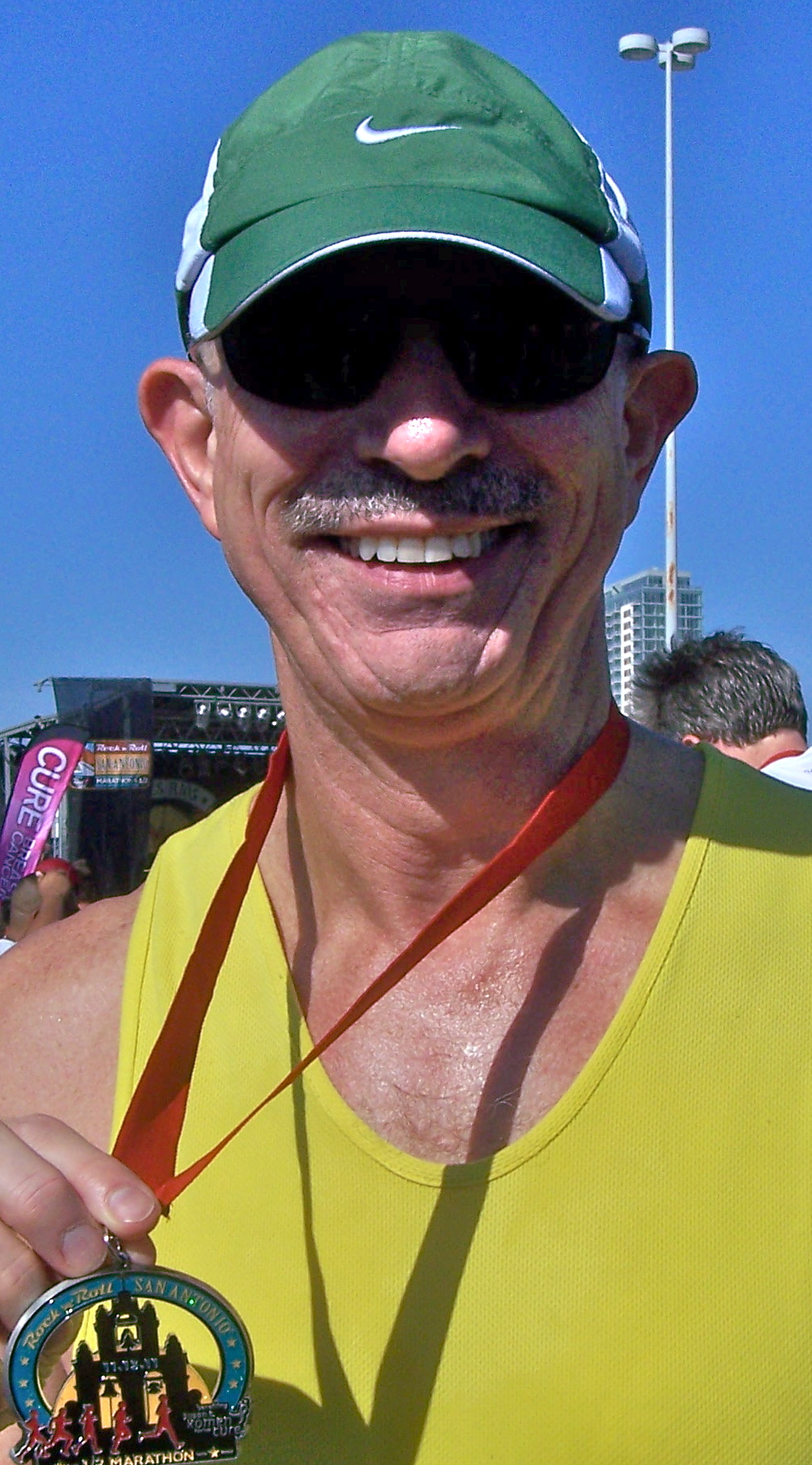
This past Sunday I participated in a Rock-n-Roll Half Marathon Race. 100_1253I’ve run full marathons (26.2 miles) before, but this time I was running the half (only 13.1 miles). Since I’ve been training for speed in my runs, the shorter distance seemed a better fit at this time.

It was a hot day in South Texas and the heat was brutal, but I managed to finish the race a full 30 minutes faster than my last half marathon finish time. I can almost hear you guys cheering!

After the race, however, I was thinking about how I learned the skills for my two favorite passions: writing and running. I didn’t wake up one morning able to run a marathon or know exactly how to create a murder mystery, for that matter.

When I first started running many years ago, I didn’t put on running shoes andMH900212963 suddenly knock out a ten-mile training run. There was a bunch of huffing and puffing (think: sounds of a freight train) through one mile, then two, and so on. Then I signed up for a 5K (3.1 miles), then a 10K and on to half marathons.

In much the same way, I started slowly learning the MH900299735craft of writing. I’ll concede that I decided unexpectedly one day to write a novel, but that was after years of technical writing and many successful newsletter adventures. Then came the false starts and the endless hours of writing meaningless chapters that eventually got tossed.

One would think it unimaginable to compare the two seemingly diverse interests of novel writing and long distance running. On the surface, one is purely physical and the other entirely cerebral.

But I assure you that running is as much cerebral as it is physical. Anyone who’s run a marathon will tell you that it’s the mind that keeps propelling you forward when the legs are screaming that you can’t possibly put one foot in front of the other one more time. Runners often talk about getting psyched up or psyched out. The translation is that one is motivating and the other defeating.

In much the same way, there’s a truly physical component to the creative action of writing. Ask any writer how grueling it is to sit in front of a computer screen for four, six or more hours at a time. The spine begs for mercy, and muscles that you were never aware of develop cramps that stay with you like garlic in an Italian lunch.

The common thread in both of these activities is to start small and rely on repetitive actions. In running, it’s simply putting one foot in front of the other, pounding the pavement day after day and going a little farther and faster each time. With writing, it’s putting one word after another, one thought that turns into a scene and scenes that shape into chapters. After much trial and error, you’ll find that you will eventually propel a storyline into a meaningful tale of adventure.

Another common experience is what happens after crossing that finish line in aMH900384941 race.  I usually sign up for another, vowing to run faster and farther in the next one. And that’s exactly what happens after completing a novel or a short story. I start another, only this time the storyline is more intriguing, the dialogue more animated, the plot feeling tighter and the dialogue better than in previous scenes.

The lesson here is to always strive to get better, whether that be in a race or with that next thrilling plot, and that takes constant practice and lots of consistent work.

So after my successful run this weekend, I’m planning my next race and the training before it to help me achieve my new goals.

I’m also planning my next short story and continuing to edit my debut novel. As in running, the phrase “practice makes perfect” also applies to the art of writing.

Thought? Comments? I’d love to hear them!

Posted in About James J. Murray, About Running, About Writing, All About Writing, Blog Writers, Blogging, Character Development Techniques, Developing Writing Skills, Difference Between Running and Writing, Learning the Art of Writing, Training for a Marathon, Training for a Running Race, Writing Skills and Running Skills | Tagged , , , , , , , , , , , , , , , , , , | 6 Comments

Anal-Retentive

As I continue my journey into the world of writing and publishing, I come across unique individuals whom I admire and take special care to listen to their opinions. Debs McCrary is one of those people. Debs is in a writers’ critique class that I take every Wednesday. More than a dozen of us gather to read and critique each others’ current works in progress.

One day Debs brought in a particularly inspiring essay that I felt needed to be shared with you. It reveals much about her knowledge and love of the written word, (and a little about what my pages look like after she gets hold of them). So please meet my friend Debs.

Debs McCrary has 25 years of experience as an op-ed columnist, editor 75124_4678275878864_441420696_nand freelance writer. In addition to her work in the newspaper industry, she is published in “The Aladdin Factor,” Reader’s Digest, Essence, Newsweek, Our Heritage, Legacy, travel magazines and several multi-industry promotional pieces. Debs aspires to pen a riveting stay-up-all-night-to-read novel but, so far, the Muse of Tantalizing Fiction has yet to pay her a visit. She currently writes for and edits a weekly community newspaper in San Antonio and hones her skills by reading any- and everything, and by frequenting writing critique groups.

 *************************************************************************

Now that you know a little more about Debs, I’m sure you’ll appreciate her wonderful essay about accuracy and exactness concerning the written word.

Please enjoy Debs McCrary’s version of being…

ANAL-RETENTIVE

It’s what I am, at least when it comes to editing and printing accuracy.  Incorrect spelling, grammar and punctuation, to say nothing of poor usage and factual inaccuracy, all set my teeth on edge.  I guess it just comes from years of technical writing and editing where typos can mean catastrophic monetary loss and untold hours of rework.  Mark Twain warned of typos, suggesting their existence in health books may result in a reader’s death.

So, I try to put myself in the position of the intended audience, a reader in search of good information.  Are the thoughts and directions clear?  Does the piece flow properly and make sense?

Give me something as simple as a restaurant’s menu that contains spelling errors and I’ll spot them before you’ve had a chance to read through the appetizers.  Marketing brochures and websites with misspellings make me wonder how business owners expect to make sales if they can’t advertise their products properly.  Even the most rudimentary word processing software has spellchecking these days.

The nuns at my high school taught me well, or at least I became a quick study because of my own faux pas.  For example, I learned that “alot” is not one word, but two.  Y-o-u-r and y-o-u-‘-r-e are not interchangeable.  The phonetic sound “TŪ” has three spellings; four if you count Spanish.  And double negatives are never tolerated – which explains why “irregardless” is not a word.  My right eye shuts and quivers every time I hear it spoken, let alone see it written.

I spot errors on billboards, advertisements, even in professional letters from multimillion-dollar companies.  Noticing several instances of incorrect subject and verb agreement on a local business’ website, I once offered to provide proofreading services — free of charge, since the owner was a former colleague – and was told they already had a staff to handle that function.  Really?  Was it in place when your website was created?  I wondered.

My obsession sometimes drives my daughter crazy.  “Mom, just pretend the church bulletin says to pray for Deacon Jones who was diagnosed with prostate cancer and not prostrate cancer.  We know what they meant – and nobody else will catch it except you.”

Just recently, a non-profit organization asked me to edit a letter for a massive fundraising campaign.  I agreed, only to find the letter so poorly structured that it required a total rewrite.  It began by saying the organization wanted to begin the new century by upgrading its facilities.  Begin?  When did the new millennium start?  Personally, I’d be reluctant to donate one crying dime to an entity that doesn’t know it’s more than a decade behind the times.  Check your calendar, people!  You don’t need an editor; you need a timekeeper.

Once, while waiting in line to return a rental car, I noticed a sign that said “Se Habla Español,” a familiar phrase in Texas to let customers know they are free to transact business in Spanish.  But directly underneath the sign sat an oblong flipchart listing company policies.  Each page was written in a different language.  The one displayed was Portuguese.  When it was my turn to be waited on, I asked the man behind the counter, who happened to be Hispanic, if the company had a large number of Portuguese customers.  He said, “No.  Why do you ask?”

“Because you’ve got this sign flipped to the Portuguese page.”

“No we don’t.”  He turned the sign to see for himself.  “That’s Spanish,” he said, and resumed completing my rental form, shaking his head, as if implying, “What a dummy she is.”

“No, it isn’t,” I insisted, pointing out that Spanish didn’t contain the same vowel clusters as Portuguese.  I flipped a couple pages until I found the one written in Spanish and turned it towards him.  “This is Spanish.”

He looked at it, realized I was correct and sheepishly said, “Well, I’ll be damned.  We’ve had this sign on that page since we opened this office a few years ago and no one ever said a thing about it.”

My editing bible has become the Associated Press Stylebook that, unfortunately, gets updated all too frequently for my taste.  In an attempt to be politically correct, entries like “alright” are now acceptable as a single word, though a few editions ago it wasn’t.  And a comma, once a staple before the word “and” in the last item listed in a sequence of three or more, is no longer required or desired.  Sister Audrey would have conniptions.

Yes, I’m an anal-retentive editor and I know it.  However (comma), I’m trying to expand my horizon to include the worlds of fiction, memoir and poetry where creativity and the unrestricted flow of thought have free rein.  Mostly, I just need to keep my opinions to myself about the writings of people who don’t know how to spell, put a comma in the right place, or conjugate verbs properly, especially businesses.  Besides, they probably already have a staff that handles that.

 *************************************************************************

Thanks, Debs, for this entertaining piece. I swear I proofed everything three (3) times before pressing that “publish” button, but I take full responsibility for any misspelled words or inappropriate punctuation that might be present (smile!).

Debs will be starting her own blog soon and I’ll be posting a link to her site when she does. I know she’ll make you a better, more precise writer little by little with each of her postings.

Thoughts? Comments? I’d love to hear them!

Posted in Accuracy in Editing, Accuracy in Writing, Anal-Retentive, Anal-Retentive in Writing, Debs McCrary, Grammar and Punctuation, Obsession with Proper Usage of the English Language, Printing Accuracy, Proper Use of the Written Word | Tagged , , , , , , , , , , , , , , , | 7 Comments