
Recently, I posted a blog on thallium, a classic drug used as a murder weapon both in  novels and in real life. After posting this, someone commented, “What about polonium?” I thought he was referring to plutonium and having a momentary crisis with spelling but decided to check it out, anyway.
As it turns out, polonium is a most interesting element of murder. After Yasser Arafat died of mysterious causes in a French military hospital in 2004, a committee of French judges opened an investigation into the death. Clinical analysis of the body uncovered significant levels of polonium in his body fluids. Subsequent testing revealed unusually high levels of the chemical on his toothbrush and articles of clothing. Israel was suspected of poisoning the late leader but proving that was problematic.
Polonium was discovered in 1898 by the talented team of Marie and Pierre Curie. The element is highly radioactive. Later testing found it to be about 250,000 times more toxic than hydrogen cyanide and it causes significant damage to organic tissue when inhaled, ingested or absorbed. But the chemical doesn’t penetrate our skin very easily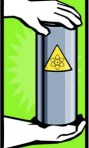 and the use of neoprene gloves provides adequate protection to a person handling it.
Since polonium is easily absorbed by inhalation, it’s transported in a special “glove box” (a sealed container, usually under negative pressure or with a double-layered, separate atmosphere).
Commercial applications of polonium are few: it’s used for heaters in space probes and in antistatic brushes to reduce static electricity. In the United States, the Nuclear Regulatory Commission tracks the product, but it’s readily available with little regulation or restriction. It can be purchased with any general license, such as a license to do business, and the buyer doesn’t need to be registered by any authorities.
Hmm! I’m beginning to get an interesting idea for a thriller utilizing this chemical as a biological weapon. The drug kills effectively with inhalation or ingestion of miniscule quantities, and it’s easily transported. It does a better job of killing over several weeks of exposure as opposed to a single dose, however, so some creative writing and plot development are in order here.
Just a word of advice for the protagonist in your story: have a readily available source of Dimercaprol. That’s a chelating agent (meaning it’s a treatment that removes heavy metals from the body). The drug was developed by and is available from a British company, so a quick trip to England would be in order for the hero in your story.
A couple of additional facts about polonium could propel your thriller into some interesting back-story twists. The first is that this chemical is part of the mix of radioactive chemicals lumped in with radon that gets trapped in indoor air. Of the estimated 160,000 yearly lung cancer deaths, about 20,000 are attributed to this indoor radon mix.
More importantly, polonium is one of the primary causes of lung cancer from tobacco.  The element makes its way into the roots of tobacco plants from phosphate fertilizers. For over 40 years, the world’s largest tobacco firms have been researching ways to remove the substance from its products but have had little success.
In summary, I offer a new chemical that could be used as a weapon of mass destruction. The kill could be massive, not necessarily immediate, but very effective for the patient villain.
Thoughts? Comments? I’d love to hear them!
 Getting to know a character deep down is necessary before you can turn that character loose in a scene. When we let those characters roam around our pages, they usually speak and interact with others, and that’s when writers often get into trouble.
 about editing the dialogue during my first draft. The nuances to consider are too subtle and take my mind away from writing the story. But with that first edit, I begin adding the
  narration. Use one or the other, but don’t duplicate. For instance, don’t have your character talk excitedly about the flavor of some food and then narrate how much the character is enjoying the meal. We get the point! Gestures also go a long way to suggest enjoyment and it uses a minimum of words. A short description of body gestures often expresses emotion or communicates thoughts better than a couple of sentences of narrative or dialogue, and it helps readers relate better to our characters.
 behind the words. For instance, “She was somewhat satisfied with my plan” sounds flat. Instead say, “The plan troubled her. I could tell she wasn’t buying it.” That gives a better visual of what affect the words are having on the character. And it would be an even stronger statement if the speaker made some gestures to emphasize the point.
 usually say, “That is an interesting and unusual red door.” They’d say, “Cool red door, never seen one like that before.” When editing dialogue, read it out loud. If it doesn’t sound natural, then IT ISN’T! Change it to normal speak. Otherwise, you cause the reader to pause (because it doesn’t feel right in the reader’s mind), and when a reader pauses, you break the reader’s concentration and lose the dramatic tension of the story. Yes, we are told to use complete sentences in dialogue, but modern fiction is written for belief. It’s the ultimate believable lie! That means we can use contractions and incomplete sentences when necessary for the reader to connect with our characters.
 Break up dialogue with some narration and some back and forth dialogue between characters. A good rule of thumb is never to have more than two sentences of dialogue together before adding some narration or at least some descriptive narrative of what’s happening in the room or to the speaker. And be succinct – make each word and each sentence count toward moving the reader forward into the next sentence.
 get my ideas for a character? The answer is simple: from everyday life. As writers, we tend to size up people as future characters. The long answer, however, is much more complex.
 the reader can connect with in the two-dimensional world of literature.
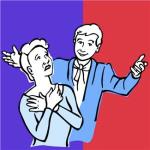 background development becomes so important. Create a virtual life for your main characters, a pedigree that makes them who they are and determines their actions. For example, a person raised in a loving family with close siblings would react differently in a given situation than a person who grew up in foster care or reform school.
 unless it’s important for the story’s progress, but it provides valuable information to you for character direction. Knowing how a character would feel in a scene provides important
  Our characters need to be definitive and those definitive beliefs and philosophies are what drive the story one way or the other. A character can be indecisive initially and that can create important dramatic tension, but then their inner principles must take over. Without a character with a strong viewpoint, the story doesn’t progress; there’s no reason for the character to take action. Action moves the story forward and motivates our protagonists and antagonists to do what they should do to entertain the reader.
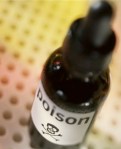 maybe a slight yellow tinge. It dissolves easily in water. In other words, it’s not easily detected when mixed with food or drink. Hmm! Sounds like an interesting substance if you need a character killed off.
 depilatory agent before its toxicity was fully appreciated. Another distinctive sign of thallium poisoning is that it damages peripheral nerves, causing excruciating pain. Victims are said to experience severe stomach cramps and nausea, and they experience sensations similar to walking slowly over hot coals.
 Powder”. Investigations into suspicious deaths have discovered thallium in tea, sodas, soups and various foods. Radioactive thallium poisoning was said to be a favorite of KGB assassins and documentation suggests that Saddam Hussein used it to poison dissidents.
 Primarily, that’s because of its antidote,
  Today I’m going to deviate from those darker, homicidal issues and talk about another of my passions –
  doing crossword puzzles at least four times a week, 47%; and dancing offered the greatest at a staggering 76%.
 second decision-making for the leader to direct the partner and the partner to interpret that lead quickly into the next step.
 biological agents (such as, bacteria, viruses or toxins).
 mass destruction by simply spreading them in the air, our water supply or along the food chain. They can kill instantly upon contact or not cause death for several hours or days, making it difficult to detect the source. And identification of the source can be even more complicated when agents spread from person to person (a contagious biological agent).
 such an attack. And that’s the central focus of bio-defense, the medical measures identified to protect people against biological agents.
 ciprofloxacin and levofloxacin)
  shortages for the rest of the population. In essence, we are back to square one regarding treatment protection against biologicals. Fortunately, increased and more effective intelligence of potential terrorist plots have been successful in keeping us safe to this point.
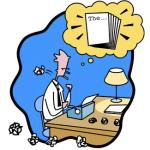 secondary ONLY to the actual murder(s). As devastating as it is for someone to die (even on paper or e-screen), it’s the actions of the protagonist that make the story come alive. So after deciding what should happen to begin the story’s journey, I start thinking about how that will affect the protagonist.
 murdered and the police detective says, “Oh well, another day, another murder,” the readers’ reaction will also be mundane and they’ll move on to another novel. We have to give the reader a sense of urgency, a reason to turn the pages and to care about what’s taking place. That reader investment occurs only when the protagonist cares to the point of obsession.
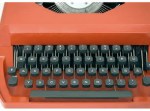 The trigger may be a murder, a series of them or some other great evil about to be unleashed, but the real story is how the protagonist will arrive at a solution to the presented problem. Without tapping into the back-story of the main characters, there can be no story in the present. There has to be intangible motivations directing the characters to do what they do to restore equilibrium into the world as it’s presented.
 protagonist undergoes an internal change: a shift of viewpoint, a realization of a source of fear or achieves some significant resolution. But that change, that paradigm shift, should not happen easily. It should affect the character to his or her very core and should cause initial resistance to change. That internal struggle gives depth to the story, and the eventual acceptance of the change makes the believable lie that fiction is…well, believable.
 reasons: first, it was the field of study of James Holmes, the alleged movie massacre shooter; and secondly, it was a term I had used last week while writing the rough draft of this week’s blog. The coincidence was unnerving since that blog was to continue my
  archeologists have uncovered evidence of
  neuroscience addresses how human cognition and emotions are mapped to specific neurons, and it speaks to the questions of how psychological functions are produced by neural activity. This has led to a new branch of social and behavioral science addressing such questions as
  enlightened age of science and technology, there are numerous methods to identify a murderer and to determine how the murderous deed was accomplished, but the “Why” of killing still baffles many.
  into one or more of the
  inhibitions are removed (as with alcohol or mind-altering drugs). For instance, an otherwise rational person could act out inappropriate anger in the form of road rage while under the influence of a psychotropic drug, or possibly beat someone to death with a pastry roller after sampling too much cooking sherry.
 divorce while another plans a murder? Why does one person work harder to outperform a competitive coworker while another plans an intricate murder? Does it all come down to an evolution of a personality disorder? That certainly makes for interesting murder mystery writing, but is there more involved?
 exhibited, but there are three main categories of drugs used in psychotherapy:
 murder are much more complex than simply motive, method and opportunity. Current science tells us there are three main reasons why people will choose to kill over other, less violent methods of resolving a major issue in their lives.
 Prescription For Murder