
 Imagine designing a murder mystery or thriller plot using a substance that transformed ordinary people into zombies and then writing a convincing story based on the science of it all.
The victims in your story would have difficulty walking because of loss of coordination skills and severe muscle twitching. They would draw up their arms and shiver. They would slur their speech and constantly be agitated. They would look emaciated and sick because they’d have trouble chewing and swallowing. If this sounds like a zombie description, I’d have to answer a dramatic “Yes!”
However, I would be describing a person with a disease known as kuru. It’s extremely rare, but always fatal. The disease reached its peak in the late 1950s and early 1960s in New Guinea and is primarily a neurological disease that presents when infectious, abnormal proteins invade the brain.
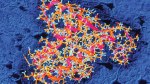 These abnormal proteins are called prions—misshapen protein particles that form when normal proteins misfold and clump together.
The Fore people of New Guinea contracted the kuru disease because of their cannibalistic funeral rituals. They ate the brains of dead relatives during funeral rites. But it’s not the tribe’s cannibalism itself that caused the disease. It’s the fact that the consumed brain matter contained the prions already and they were transmitted orally within the brain matter.
Present day science tells us that prions are amyloid particles that form from normal brain proteins and may contribute to such diseases as Alzheimer’s, Parkinson’s and Huntington’s. Scientists describe a prion as the smallest infectious disease-causing agent, but it is also the most indestructible biological entity.
Prions are responsible for bovine spongiform encephalopathy (known as mad cow disease) and its human counterpart, Creutzfeldt-Jacob disease. There are no generally accepted treatments for these infections and they are almost always fatal.
Initially, people with prion body accumulations in the brain experience neurological degenerations that exhibit as behavioral and personality changes, dementia and muscle coordination difficulties. The symptoms progress to convulsions and eventually to death.
Besides consuming contaminated brain matter, these encephalopathy diseases can be transmitted via blood transfusions, intravenous immunoglobulin therapies and human growth hormone treatments that have been contaminated with or contain prion bodies. Contaminated surgical instruments and organs for transplant can also transmit prion bodies.
It should be noted, however, that tests for such abnormalities have become standard practice during blood collection and prior to organ transplantation. So how could you design a murder, or a catastrophic epidemic for that matter, around the transmission of prions?
Novelists have, in fact, written and published novels with this science interwoven into the plot—like Cold Plague by Daniel Kalla and The Sixth Extinction by James Rollins. So, you’d have to devise a bit of a twist for your plot to overshadow these successful authors.
 Articles that discuss the science behind a would-be zombie invasion suggest that attaching a prion to a virus that could spread and carry the prions to the frontal lobe and cerebellum could be effective, but likely a slow process. It’s been suggested, however, that any virus that causes encephalitis would do—herpes, enteroviruses, mosquito and tick-borne viruses, rabies and even some so-called childhood diseases like mumps and measles.
Dr. Jay Fishman, Director of Transplant Infectious Diseases at Mass General Transplant Center in Boston states that attaching a prion to a common virus is “a fairly unlikely scenario” and, therefore, an author would need lots of creative thinking to make the science work.
I suspect that some clever genetic alteration of a fast-acting virus would be in order here to make such an event believable to create a scientifically based zombie plague or a zombie-like murder, but I’ll leave those specific details up to you.
Thoughts? Comments? I’d love to hear them!
 Some time ago, I watched an interesting TV murder mystery program. It had a most intriguing plot. The scenario involved a wealthy man who had his home office designed such that it was similar to an impenetrable vault—both for security and privacy purposes. The room was so secure that it had its own air supply and other essential life-sustaining amenities for extended periods of seclusion.
 However, this well-designed, perfectly secure room became a murder weapon in itself because someone who was displeased with the man added a halon gas canister to the ventilation system. The man was murdered by asphyxiation when the gas canister was remotely activated and halon gas pumped into the room. This action temporarily replaced the room’s normal atmosphere, thus depriving the man of life-sustaining oxygen.
 feasible, since halon is not as available as it used to be. I decided that the TV show writers were possibly working from older research data.
 Nitrogen, argon and carbon dioxide naturally occur in the atmosphere, they do not harm the environment and are not toxic to humans (at least to the extent regarding residues on surfaces after their use).
 might consider placing that character in a room or vault that can be sealed off rapidly before the character can escape and then remotely activate the fire suppression system or attach a gas canister to flood that area with one of these inert gases.
  Experts
 Additional regulatory clearance is being sought for medications used by heart patients, stroke victims, those with H.I.V., diabetic patients, and post-surgical patients to monitor for taking too much opioid pain medications.
 another “Big Brother Watching” scheme, is a concern with many patients. At least for the foreseeable future, such technology is merely an interesting option to conventional oral medications, and this new technology can be rejected by patients with privacy concerns.
 Here in the United States it’s Thanksgiving time—Thursday, November 23rd to be exact—and it’s a day of fantastic food feasts, with the bonus of a long holiday weekend ahead.
 Happy Thanksgiving! And I wish you success at being thankful on a daily basis.
 Several years ago, I wrote a blog about
 “national emergency” with statistics that indicate almost 150 people die each day from a prescription opiate overdose.
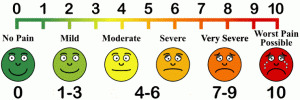 patients receiving the non-narcotic combo rated their pain two hours after dosing as a 4.3 on the scale, while the other three groups of narcotic-dosed patients rated their pain reduction as 4.4, 3.5, and 3.9, respectively—a statistically insignificant difference.
 In the United States, Veterans Day is the anniversary of the signing of the armistice that ended the World War I hostilities between the Allied nations and Germany in 1918.
 as various other celebrations and parades around the nation. My own city, San Antonio, will have a huge parade on Saturday along one of the main downtown streets.
 On this day, take a moment at 11:00AM to remember those who have sacrificed to keep our respective nations free from tyranny. And if you see a veteran this week, take a moment to stop and shake his or her hand and say, “Thank You for your service!”
 severely injure ourselves, feel afraid, or do strenuous exercise. It’s known as “the fight or flight hormone” (along with some help from norepinephrine and dopamine). It’s interchangeably referred to as adrenaline or epinephrine. In some literature, you will see it spelled adrenalin, and both spellings are considered correct.
 Adrenaline, as an epinephrine drug, also treats severe allergic reactions since the drug narrows blood vessels to raise falling blood pressure. It also opens airway passages that may be constricted with associated wheezing. And there are auto-injectors available for people who may experience such allergic reactions.
 dose of 0.3mg (the 1:1000 strength). Since I have asthma, I carry around an injector. I’ve not used it for an asthmatic episode, but I did use it once while experiencing a rather dramatic reaction to an antibiotic.
 Treatments to prevent the fatal outcome include administration of benzodiazepines and beta-blocker drugs, but administration should be timely since epinephrine acts rapidly, especially if it is given intravenously.
 patch applied to the skin. This transdermal patch slowly releases fentanyl over a 72-hour period. When I practiced pharmacy in an out-patient setting, a significant number of patients came to my homecare services sporting fentanyl patches as part of their overall pain relief plan while our nursing support administered intravenous medications for a variety of ailments that caused the extreme pain.
 the dark web and become extraordinarily profitable for illicit drug distributers. Heroin-fentanyl on the street costs a fraction of what prescription painkillers cost on the street. Although much focus has been given recently in news broadcasts regarding prescription opiate abuse and overdoses, most of the deaths are seen with illicit opiate abuse—as with the synthetic opioid fentanyl and fentanyl-laced street drugs.
 publishing. My piece was named “Santa’s Secret Helper” and it was a rather hilarious (and irreverent) take on what can go wrong when a curmudgeon drinks the wrong kind of tea and has a personality change for the better during the Christmas season. As you can imagine, the central premise involved a drug misadventure. I may re-publish it as a series of blogs closer to Christmas for your entertainment.
 limestone. It can be found predominantly in the southwest areas of Texas and Mexico. The flowered “buttons” of the plant contain a psychoactive alkaloid called mescaline that produces a wide range of psychological effects, including deep insight into one’s spiritual side, when crushed and made into a tea.
 Currently, peyote is considered an endangered plant, and selling illegally poached plants are on the rise. For that reason, this plant made a perfect drug component for the misadventure in my updated short story.
 honest communication with others and produce profound introspection. The drug’s hallucinogenic qualities are reported to enhance interconnectedness with nature, oneself and with other people.
 I was shopping with a friend recently and she had castor oil on her grocery list. That gave me pause. From my early days as a retail pharmacist, I remembered that castor oil was sold over the counter as a laxative. Today, there are more effective and safer laxatives on the market.
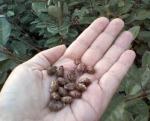 pellet, or it can be dissolved in water.
 exposed, and if it will be fatal. These include how much ricin a person is exposed to, how long the exposure lasts, and what exposure method is used. For instance, inhalation and injection are almost always fatal, but ingestion may only make a person extremely sick, especially if medical support is rapidly provided.
 Unfortunately, various techniques for making this poison are readily available on the Internet, and periodically this method of murder is used in terror plots against government or corporate personnel. Therefore, murder by ricin can be categorized as a murder “ripped from the headlines,” making it an interesting and often used lethal weapon on TV, in the movies and in novels.
 Prescription For Murder