
 Some time ago I happened upon an interesting article about the benefits of psychedelic drugs—WHAT?? And, being a child of the 60s, it peaked my interest.
Not that I dabbled in recreational drugs back in college when it was all the rage. I really didn’t! I’ve always had an innate fear that a little of a good thing may be fine, but too much could be injurious or even lethal.
That mindset is what interested me in this article. It focused on “a little of a good thing” and suggested that, since the late 1990s, there’s been a resurgence of medical research on the benefits of psychedelic drugs. This viewpoint particularly caught my attention since I’ve written blogs in the past about the detrimental, and even lethal, effects regarding the recreational, and sinister, use of certain chemicals.
More than 50 years ago, the US government funded labs to study psychedelic drugs like lysergic acid diethylamide (LSD) and other psychedelics as promising, powerful new drugs. Unfortunately, recreational use of these drugs evolved (think Woodstock, etc) and that caused the US government to ban further testing of many hallucinogenics/psychedelics as dangerous and to classify them as having no accepted medical use.
Officially, these drugs are categorized as Schedule I drugs, meaning they are illegal in the US for any use (medical or otherwise), and the government’s more recent war on drugs has severely limited research opportunities on psychedelics.
However, some research continues—much of it outside of the United States—and the benefits of several psychedelic drugs are beginning to be appreciated once again. One overwhelming truth seems to emerge from these studies. It’s the fact that the  fears that psychedelic drugs cause an increased risk of mental illnesses are unfounded. In reality, these studies are taking a fresh, objective new look at the potential use of psychedelics to TREAT mental illnesses.
LSD is one of those drugs being studied with renewed interest. In research that goes back 40 years, LSD was shown to significantly reduce anxiety in patients facing end of life issues. A more recent Swiss-controlled study involving terminally ill cancer patients revealed a 20% reduction in associated anxiety and depression regarding their impending demise when using LSD.
Other studies indicate that long-term use of LSD resulted in a considerable reduction in outpatient mental health treatments and lowered the use of powerful psychiatric medications. Like LSD, other psychedelics are being studied and interesting benefits are being revealed.
Psilocybin—more commonly known as the hallucinogenic component of “magic mushrooms”—has been studied for its calming effects on certain brain functions. Psilocybin is said to eliminate confusing/overwhelming thoughts and leads to increased cognition and memory.
Patients treated with psilocybin recall memories more vividly and accurately, and this effect has been confirmed on a neurobiological level with MRI scanning of the brain.
Psilocybin has also been shown to have significant benefits in treating alcoholism and smoking addiction. In fact, one study followed five patients who were given this drug to kick their smoking habit and all five completely quit smoking after one treatment. With follow-up visits of up to one year after treatment, four of the five were biologically confirmed to have continually abstained from cigarettes.
In the past I’ve blogged about a couple of interesting recreational drugs that can be deadly if used indiscriminately—MDMA (commonly called Molly) and DMT (dimethyltryptamine). Both seem to also have beneficial effects when used properly.
MDMA, the psychoactive chemical in the recreational drug ecstasy, has been shown to successfully treat post-traumatic stress disorder (PTSD) in military veterans and to decrease the anxiety associated with cancer treatments.
Interestingly, a slight chemical modification of MDMA has been studied at the University of Birmingham and it’s been shown to have aggressive anti-cancer potential. The study is preliminary and further studies are being conducted regarding this intriguing effect.
Other studies on MDMA support beneficial effects for treating the social anxiety in autistic adults, with a fascinating 77% increase in both ease in social settings and the ability to communicate more effectively with others.
DMT is the psychoactive compound found in a Peruvian Amazon rainforest vine that is used to make a brew called ayahuasca. Ayahuasca is utilized for spiritual and healing purposes in that area of the world, and in recent years DMT is appearing as a recreational street drug for its hallucinogenic effects.
From a medical treatment standpoint, DMT seems to “untangle” complex and  unconscious psychological stresses and is of benefit in treating various depressions, cancer treatment anxiety, and increasing the hopefulness and quality of life for multiple sclerosis patients.
So, the silver lining is that these potentially dangerous drugs that are often abused and lead to detrimental—or even lethal outcomes—can have a more benevolent quality to them when channeled properly.
As with most things, both good and bad can result from the decisions we make and the actions we take as humans. What path results from those decisions and actions often make for great story telling.
Thoughts? Comments? I’d love to hear them!


 From those experiences, I’ve learned that deciding on the right New Life Goals can be daunting. You may have one BIG change you wish to make or there may be many small adjustments you’d like to incorporate into your life. The principles of change are the same for both: Plan, Execute, Evaluate, Adjust and Repeat.
 want to lose weight, this is when you start passing up dessert and/or join a health club. If you want to improve your outlook on life, this is when you begin to smile more and attempt to interact better with others. In short, you plan what you want to do and then do it.
 This is where you evaluate how the change fits into your life and where you make small adjustments to continue the momentum to achieve that goal. If you want to eat less, stop going out to restaurants and control portions. If you have trouble finding time to go to a health club or scheduling a run, get up earlier or give up evening television.
 them into your life and making that specific change a habit—and it’s a continual process. And keeping the momentum going in the Macrocycle is as important as that initial Microcycle step to identify the new goal.



 One of the more recent and visibly-reported medication increases involved
  parasitic medication used to treat infections such as malaria and
  The students worked through an online research-sharing platform called
  their research and the new technique of engineering this drug since these students were kind enough to publish their manufacturing process fully and free online.
 Reed Hastings speculated that the future of entertainment might be something OTHER than watching and interacting with the screen of an electronic device.
 sources, Hastings suggested that new technologies like augmented and virtual realities (AR and VR) are already happening and could branch out beyond simple gaming to entertainment that does not require sophisticated tech equipment.
 might take a personalized colored pill to hallucinate in an entertaining way, and then take a white pill to bring the customer back to the real world.
 technology to spice up my storylines. That might now include entertainment without screen devices! And how sinister could that become if that entertainment were pharmaceutical in nature and then misused?
 exact—and it’s a day of fantastic food feasts, with the bonus of a long holiday weekend ahead.
 decision we make, writing has been most rewarding for me in many ways. A few of the “special perks” of being a writer, and the ones for which I am most thankful for, include:
 professions where it’s totally acceptable to live in a fantasy world and still be considered mentally stable. I love that I can have imaginary friends (my characters) and can communicate with them anytime I want. I’m thankful that I escape reality on a regular basis and still have those around me think that’s perfectly normal.
 my computer and immerse myself in the imaginary worlds in which my characters live. Often, the real world continues to figuratively knock at my office door. I’m thankful for those times when I’m able to be absorbed into the worlds I’m creating for my characters. That time is very special and extremely personal to me until the manuscript is complete and ready to be shared with others.
 We all need sleep to survive. Sleep is a natural process that allows the body to recharge, refresh and prepare (both physically and psychologically) for a new day of adventure.
 this disease is rare, I mean EXTREMELY RARE. Research shows that this inherited disorder has been discovered in only about 40 families worldwide (affecting about 100 people).
 The
The 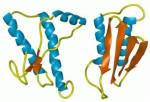 such as mad cow disease. FFI and sFI, however, are very specific prion protein mutations.
 Antimony is a naturally-occurring metal usually found in ore deposits. Although it is a rare element, it’s extensively used in the manufacturing industry and is present in many household items. Its appearance is described as “a silvery, luscious gray metal” but consumers often don’t see it in its natural state.
 also a key component as an alloy with lead in the manufacture of tracer bullets and batteries, and it’s even used in therapies to treat schistosomiasis (a flatworm parasite) and leichmaniasis (a parasite from sandflies).
 hazard. The symptoms for inhaled exposure include dizziness, headaches, pneumonia-like symptoms and “antimony spots” appearing on the skin. Ingested exposure might exhibit as depression, nausea and vomiting, kidney damage, and may even cause certain types of cancer.
 odorless, colorless, tasteless qualities—but because of its ready availability in so many manufacturing processes.
  Prescription For Murder