
I realize that the Halloween holiday is now behind us, but all that spooky stuff and people dressed up as zombies reminded me of a blog I did a couple years ago about an interesting medical disease known as Cotard’s Syndrome.
In 1880, the neurologist Jules Cotard described this mental disorder as “The Delirium of Negation” and the disease has since been alternately named Cotard’s Syndrome, Cotard Delusion and Walking Dead Syndrome.
The simple definition of Cotard’s Syndrome is that a person thinks he or she is already dead but still maintains the capacity to move around. The patient walks aimlessly with no purpose and with no interest in sleep, so the person feels trapped in a zombie-like state of existence.
People afflicted with this mental disease have a strong delusion that either they have already died, do not exist or that their blood and/or internal organs have been lost. Some of the patients with this disease also believe that they have lost various body parts or insist that they have lost their soul.
With this disorder, people have trouble performing simple personal hygiene tasks such as bathing or brushing their teeth. They are unable to conduct day-to-day work activities or perform any kinds of actions that normal people do.
 They withdraw from the world, thinking that their bodies are decaying and putrefying, and their minds even delude them into seeing the process of decay when they look at their reflections in a mirror. They often do not eat, drink, speak much or interact with others.
Patients with Cotard’s Syndrome have been shown to spend considerable time in a graveyard because that is where they believe they should be.
There were over 1,000 cases documented in 2013. And, although Cotard’s Syndrome was not included in the 1994 nor the 2000 edition of the Diagnostic and Statistical Manual of Mental Disorders, it was included in the tenth edition of the International Statistical Classification of Diseases and Related Health Problems of the World Health Organization, in which “Cotard delusion” is identified as a disease of human health.
Cases have been reported in patients with mood and psychotic disorders, and the psychiatric syndrome has varying degrees of severity. Mild cases exhibit as despair and self-loathing, and more severe cases are characterized by intense delusions of non-existence and chronic psychiatric depression.
A study of a Cotard’s patient showed that the PET scan of the person’s brain indicated low metabolism activity. Additionally, large parts of the patient’s frontal lobe (which controls attention, memory and motivation) and the parietal lobe (sensory perception) of this patient’s brain had almost no activity—a condition common to people in the vegetative state.
The cause of Cotard’s Syndrome is still unknown, but one famous case was the vocalist in a black metal band called Mayhem and the vocalist developed Cotard’s after he was resuscitated following a serious auto accident.
What is known is that most cases of Cotard’s are more responsive to electroconvulsive treatment (ECT) than to pharmacological therapies. Follow-up psychotherapy with antidepressants, antipsychotics and/or mood stabilizers has proven to be beneficial, however, in restoring a positive self-image for these patients as well as a more normal hopefulness about their future.
 So, if you’re looking for a zombie-like plot scenario but want a more scientifically-based rather than a science fiction-based approach, look into Cotard’s Syndrome for a reasonable explanation of your next walking corpse character.
Thoughts? Comments? I’d love to hear them!
 into a web of deceit, dishonesty or lethal acts (at least in my novels).
 The article stated that dishonesty is an integral part of our social world. People lie all the time—those bits of untruths we call white lies—to be more socially correct or to make themselves or those around them feel less uncomfortable about a harsh truth.
 their brains when they were asked to lie for personal gain. The results indicated that the amygdala, that part of the brain associated with emotion, received greater blood flow when people initially lied for some personal gain. However, the response of heightened blood flow (more brain activity) decreased with each new lie—even though the magnitude of the lies increased.
 As a clinical pharmacist, I’ve read about studies where students were given a mild sympatholytic agent (those types of drugs used for anxiety, panic disorders or for PTSD) and the results showed that the students were twice as likely to cheat on an exam as compared to those who took a placebo. The drugs altered the brain’s chemistry enough to weaken their moral judgment without a corresponding physiological response (the usual nervousness, sweating, elevated blood pressure, etc) one can experience when doing something that is known to be wrong.
 Having recently completed the Chicago Marathon on October 9th, I’m now ramping up my training for the Marine Corp Marathon in Washington, DC on October 30th. I’ve run full marathons (26.2 miles) before, but NEVER have I run two within 21 days.
  suddenly knock out a ten-mile training run. I started by huffing and puffing (think sounds like a freight train) through a one-mile run, then two, and so on. Finally, I took an important step and signed up for a 5K (3.1 miles) race, then later a 10K race and on to half marathons and finally full marathons.
 of writing. I’ll concede that I decided unexpectedly one day to write a novel, but that was after years of technical writing and after several successful newsletter adventures. I’ll admit that there were false starts and the endless hours of writing meaningless chapters that eventually got tossed, but—like in running—I got better the more I practiced and studied how to write fiction.
 finish line in a race. I usually sign up for another race, vowing to run better in the next one. And that’s exactly what happens after completing a novel or a short story. I start another, only this time the storyline is more intriguing, the dialogue more animated, the plot feeling tighter and the narrative more descriptive than in previous manuscripts.
 I blog about dark and sinister subjects—the
  I defined myself? One day, though, I took a mental step back to analyze those jokes. Was I any different in how I managed my career than the physician to whom I trust my health? After all, he “practices” medicine. Absurdly, I wondered, “Does he practice on me, maybe to get it right later with another patient?”
 So why are many health professions called a PRACTICE? If I went to my financial advisor and asked if he were practicing his profession, he’d probably say, “I do better than practice. I get it right.” Is his profession any more exacting than pharmacy? And, if he doesn’t invest my money as wisely as expected, all I do is have less of a nest egg. In pharmacy, however, detrimental results are grief-ridden and often life-threatening.
 for one important reason. Instead of potentially burying my patients, I can bury the red herring and that’s a GOOD THING.
 garlic have in common with wine and cow bile? The obvious answer is “nothing” but a more subtle answer is “apparently everything” when the question is properly framed as, “What does a medieval recipe of botanicals made into a slimy medicinal concoction cure?”
 increased resistance of certain bacteria to antibiotics, particularly the troubling Methicillin-resistant Staphylococcus aureus (MRSA), which I have written about in previous blogs (
 and bullocks’ gall, of both equal quantities, mix with the leek (and garlic mixture), put this then into a brazen vessel, let it stand nine days in the brass vessel, wring out through a cloth and clear it well, put into a horn, and about night time apply it with a feather to the eye.
 Although amazed at the initial results, scientists were skeptical until the results could be duplicated time and again. After preparing four batches of the ancient remedy, each test of the different batches produced similar stunning kill rates.
 medical cure is required. Such medications not only prolong life but also enhance it in the process.
 bleeding. These drugs specifically help blood coagulate when bleeding is uncontrolled to prevent further blood loss. The cause could be a sudden trauma, such as an accident; or it could be from a bleeding disorder, such as hemophilia.
 But, when there is no essential need, the use of these drugs causes excessive blood clotting and creates life-threatening blood clots that travel within the body’s circulatory system searching for tissue to destroy.
 So if you need to kill off one of your characters in an unusual manner, have your victim take a long international flight. An accidental bump into the shoulder of the victim by an attacker and a quick injection of a lethal dose of Vitamin K would insure a very painful and deadly outcome for your victim by the time the plane would land.
 severely injure ourselves, feel afraid, or do strenuous exercise. It’s known as “the fight or flight hormone” (along with some help from norepinephrine and dopamine). And it’s interchangeably referred to as adrenaline or epinephrine.
 Adrenaline, as an epinephrine drug, also treats severe allergic reactions since the drug narrows blood vessels to raise falling blood pressure. It also opens airway passages that may be constricted with associated wheezing. There are auto-injectors available for people who may experience such allergic reactions.
 around an injector. I’ve not used it for an asthmatic episode, but I did use it once while experiencing a rather dramatic reaction to an antibiotic.
 Treatments to prevent the fatal outcome include administration of benzodiazepines and beta-blocker drugs, but administration should be immediate since epinephrine acts rapidly, especially if it is given intravenously.
 in parts of Africa and Southeast Asia has been used for centuries in folk medicine as a psychoactive drug to improve mood and relieve pain.
 Scientists have provided
  effects, depending on the dose given. The tree from which kratom is extracted is in the Rubiaceae family, the same family as Coffea—the genius of flowering plants that produce coffee beans.
 antibacterial agents in soaps, as well as the use of antibiotics in raising farm animals. The primary danger is the potential to evolve bacteria into antibacterial resistant killers, thus creating a SUPER BUG that cannot be destroyed.
 I cannot imagine a future where a simple sore throat, a sinus infection or a cut on the arm becomes a death sentence. Without effective antibiotics, however, that fantasy future could become a reality.
 psychoactive designer drug created by spraying natural herbs with legal chemicals that imitate the effects of cannabis.
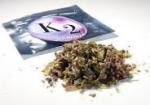 users in the 12-17 year-old age category. That’s because the product often is sold in stores as a household item and is sometimes labeled as herbal incense. In other retail establishments, like head shops and convenience stores, the product is marketed as “K2” or “Spice”.
 are that the legal chemicals used to mimic the psychotropic effects of the real drug often create a psychosis; that is, they facilitate the onset or worsening of existing psychiatric disorders and therefore can produce enhanced hallucinations, delusions, violence and impaired insight. So anyone with a predisposition to a psychotic episode could be pushed over the edge by using these legal alternatives.
 I continue to wonder if a more prudent approach would be public education starting at an early age regarding the dangers of using these “pop up drugs” ~
 Prescription For Murder