
 In last week’s blog, I introduced the concept of toxidromes—defined as a group of specific symptoms and clues which medical examiners use to identify the specific substance used to poison a victim.
In that blog, I discussed two of the most popular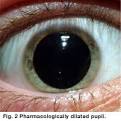 toxidrome categories in modern fiction—Opiod/Opiate Toxidromes and Stimulant Drug Toxidromes. I stated that a central clue to identifying one of those lethal substances was to “look at the eyes” because depressant drugs such as opiates constrict the pupils and stimulant drugs dilate the pupils.
Today I’d like to continue the discussion of toxidromes by presenting two other drug categories that also have telltale clues involving the victim’s eyes and which can lead to a misdiagnosis of a lethal substance. A seasoned murder mystery writer always considers other hidden clues to construct a convincing story and to solve the murder in a believable and accurate fashion, and I hope this blog helps further that cause.
In last week’s blog, I mentioned that there were six general categories of toxidromes in modern toxicology: Opiod, Stimulant, Anticholinergic, Cholinergic, Sedative/Hypnotic and Serotonin Syndrome Substances.
Like those of opiod and stimulant drugs, anticholinergic and cholinergic toxidromes also affect the pupils in a specific telltale manner, and that might lead your medical professional character to a wrong conclusion about the lethal substance unless that character looks for further clues. Anticholinergic and cholinergic drugs produce more specific signs of an overdose that distinguish them from other toxic substances.
Without going into the complicated science behind the mechanism of how anticholinergic vs cholinergic drugs work in the body, the following is a brief discussion of the best ways to identify these drugs as lethal substances in a murder mystery.
Anticholinergic drugs involve several classes of drugs that include antihistamines, tricyclic antidepressants, muscle relaxants,  antipsychotic drugs, anti-nausea patches and even some asthma medications. The common symptoms of an overdose for all of these drugs are stated as, “hot, dry, blind, red and mad!” The ways medical examiners remember toxic symptoms of these drugs are as follows: “hot as a hare, dry as a bone, blind as a bat, red as a beet and mad as a hatter.” Anticholinergic drugs also cause the pupils of the eye to dilate.
Therefore, it’s important to introduce other telltale signs of an overdose besides the size of the victim’s pupils in your writing. A combination of the above symptoms surely should provide interesting drama in a murder scene and give plenty of clues to your police and medical professional characters to identify the lethal substance and tie it back to your villain.
Cholinergic drugs, on the other hand, produce very WET side effects and the acronym SLUDGE is used most often to remember the symptoms of an overdose of these drugs. SLUDGE refers to Salivation, Lacrimation (tearing), Urination, Diarrhea, GI distress and Emesis. Substances in the general cholinergic category include muscarine-containing mushrooms, several nerve agents, nicotine, and a variety of insecticides. Cholinergic drugs, however, produce constriction of the pupils of the eye and the combination of the above symptoms with pupil dilation help zero in on cholinergic substances as lethal weapons.
The entire subject of toxidromes can be very complicated and confusing. By doing some basic research into a few simple diagnostic clues, however, a writer can make solving the murder in his/her mystery novel very entertaining for the reader and achieve a level of believability that transforms good writing into GREAT WRITING!
Thoughts? Comments? I’d like to hear them!
********************************************
LIKE MURDER MYSTERIES?
HOW ABOUT INTERNATIONAL THRILLERS?

Check out James J. Murray, Author and his books on:
 The murders that occur in my novels and short stories often involve a lethal medicine or a poison. To create a believable plot, I make sure to do my homework to get the toxic effects of those substances correct. That’s where
 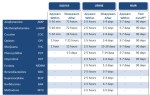 poison, a tox screen is not as helpful as one would think. This is because it only detects the most common drugs or toxins, and there is also a chance for false positive or negative results with general toxicology screening.
 fentanyl, acetyl fentanyl and desmorphine) each create lethargy, confusion, slurred speech and then lead to a coma prior to death. Respiratory depression is often the cause of death. The victim simply ceases to breathe. Heroin is a common lethal drug in this category.
 opiates and opiods and is the usual treatment of first responders and law enforcement when an overdose is suspected. Naloxone auto-injectors with a premeasured opiod-antidote dose are available for rapid use by first responders on a suspected overdose victim.
 been used as wartime bio-weapons. One of the common denominators of these lethal compounds is that many were first developed as pesticides and used for that purpose until the lethal effects to humans were realized.
 produced by a Denver, Colorado company in 1948. The product was marketed as an alternative to
  by inhalation, ingestion or via contact with skin. Much of the chemical is metabolized and eliminated by the human body. A clinically significant portion is stored in fat cells, however, and accumulation in the body creates the toxic effects.
 in the amount of toxic substance in an organism that occurs because the rate of intake exceeds the organism’s ability to remove the chemical from the body.
 commercially produced in two predominant forms—white and red phosphorus. In its white phosphorus (WP) structure, WP is a waxy substance that gives off a slight glow in air. In the late 1880’s a Berlin woman laced her husband’s soup with the chemical to secure an insurance settlement, but the crime was foiled when the husband’s friends noticed that the soup glowed when he stirred it.
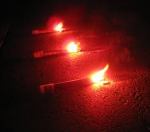 fireworks, flares and weaponry. Red phosphorus is far more stable at room temperature and that form is used on match tips and also in pesticide formulations, such as rat and roach pastes. Red phosphorus can also be volatile at higher temperatures and can become explosive when used as an ingredient in backroom methamphetamine labs.
 poisoning is a characteristic garlic odor to the victim’s breath and vomitus. Another interesting piece of evidence is a slight glow (phosphorescence) to the victim’s vomitus and feces that is termed “the smoking stool syndrome”.
  as an anti-aging cosmetic. The product, called XPL in the study, is a silicon-based polymer that becomes a skin-conforming elastic “second skin” that smooths out wrinkles, reshapes the surface of skin to accomplish such feats of wonder as eliminate puffy bags under eyes and vanish visible signs of aging almost instantly.
 XPL technology has the potential to expand the transdermal drug application market because of its enhanced properties of being flexible, non-irritating, more optically pleasing, and its unique ability to conform to the movement of skin and yet return to its original shape.
 Workout
 I feel pretty good about my health status, but all that exercise takes time—time I could be writing and killing off a few more characters in my murder mystery novels or creating more international intrigue in my thriller novels. So I researched this “drop in the bucket” workout plan and found a few interesting facts as well as a few “deviations” from those facts.
 (already I’m seeing the misnomer in the name), then the participants pedaled as hard as they possibly could for three 20-second intervals followed by a cool-down of two minutes of slower pedaling (so far I’m seeing at least a five-minute workout). They did this intense exercise regimen three times a week, all adding up to 30 minutes of exercise a week (so each session ACTUALLY took TEN minutes to accomplish).
 The One-Minute Workout is based on performing one of a group of exercises (like push-ups, running up a set of stairs, squat jumps or jumping rope) and focuses on only ONE of those exercises at a time for a total of one minute of exercise several times a week—and eventually one or more times a day. The concept is that anyone can carve out one minute here and there in their busy lives to focus on becoming and staying fit.
 that you’ll learn to dread those workouts because of the extreme physical stress they put on the body. You might possibly (and probably) find excuses to put them off (or to not do them at all). For sedentary, overweight individuals, this type of sudden bursts of exercise may be too difficult to accomplish and may even be dangerous until a certain level of fitness is achieved with a more moderate exercise program.
 SEUMAS GALLACHER escaped from the world of finance five years ago, after a career spanning three continents and five decades.
 Population aging in first world countries is a growing concern for many reasons. One of those involves the issue of polypharmacy in the older adult.
 medically necessary, but that situation is more difficult to identify without discontinuing all medications one-at-a-time to discover which drug produces no ill effects when discontinued.
 term that refers to the side effects of a drug that are misdiagnosed as completely new medical issues and that result in further drug prescribing. The potential for additional side effects and/or drug interactions with the introduction of even more drugs can lead to FURTHER adverse drug reactions, and potentially even more drugs added to the equation.
 and ask the pharmacist to do a thorough drug interaction study of current medications. The drugs involved in the interaction study should include over-the-counter (OTC) medications and herbs since these too can contribute to adverse drug reactions and interactions. Some of the
  Special Forces, Jon’s life implodes when evidence found at a murder scene implicates him in an elaborate scheme to distribute a pharmaceutical quality street drug disguised as an experimental medication. With the help of a trusted army confidante, Jon reenters the world of covert ops and cyber intelligence, and he embarks on a global mission to save his reputation and regain control over his life as he uncovers a complex international conspiracy to redefine the nation’s recreational drug culture.
 quickly became known as an excellent chemical warfare agent and was made on an industrial scale by Germany during World War II. It was the first of the so-called G-Series nerve agents developed during that time.
 chemical, it presents as a clear, colorless, and tasteless liquid with a faint fruity odor. Tabun readily mixes with water, so it could be used to poison water and water-based liquids. Since tabun contamination is possible on a small or a grand scale, it could be utilized for an intimate murder scene or be used by a thriller writer to create scenes of catastrophic destruction.
 Tabun transforms into a vapor when heated, and the vapor can easily be absorbed into clothing materials. When fabrics have been exposed to the vapor, the clothing releases the toxic vapors for hours after and can be deadly to anyone wearing the clothing.
 with rapid progression to convulsions, total lung function shutdown, and loss of bladder and bowel control. Even a small drop of tabun on the skin can cause sweating and muscle twitching where the chemical touched the skin.
 However, some of these botanical compounds have a very narrow dosage range between a therapeutic effect and toxicity. This tight range of beneficial action is alternately referred to as the Therapeutic Index or the Therapeutic Window.
 resembles wild parsley or horseradish. There are 350 species of aconite that exist around the world, 170 in China alone. Many are found throughout Asia, Africa and Europe. More than 100 species are found in the temperate climates of both the United States and Canada.
 numbness in the extremities or poor circulation (as in cold hands and feet) use aconite preparations to stimulate circulation, hence its colloquial reference name of “blue rocket” to the variety that produces beautiful deep blue flowers. In the same way, aconite preparations are used to alleviate joint pain, inflammation and certain skin diseases by stimulating blood circulation throughout the body.
 death! Even slight contact with the flowers can cause the fingers of one’s hand to become numb—a typical example of the therapeutic effect of aconite progressing to a toxic side effect with excessive exposure.
 Symptoms of
  Prescription For Murder