Murder – The True Definition

The criminal act known as MURDER is defined in a number of ways, but in most references the definition is distilled to the following words: an unlawful killing with malice. The words unlawful and malice give the term its defining structure and distinguishes the act from acceptable killings, such as in times of war or other justifiable homicides.

CB043676In researching the law related to killings, a murder can be defined by three basic characteristics and those must be proven beyond a reasonable doubt: 1) the act of causing a death must be deliberate, meaning it must be premeditated and calculated; 2) the act must be intentional to either kill, cause grievous bodily harm or be one of reckless indifference to human life; and 3) the act must not have been carried out as self-defense.

But beyond those specific legal references, I’ve been thinking about what really defines a murder. Initially, I came across a reference to a 1968 TV movie called Prescription For Murder. It was about a psychiatrist who had an affair with a patient and convinced her to help him kill his wife (a deliberate, intentional, non-self-defense killing). A little known, persistent detective named Columbo, played by Peter Falk, solved the case andMH900070935 this led to his highly successful 1970’s TV series Columbo.

Detective Columbo was a favorite of mine, not only because he solved his cases, but also because he solved them with a psychological twist. He looked beyond the obvious and studied the motivational possibilities behind the killing.

So I asked myself the same questions I suspect the writers on the Columbo series had to ask before writing every episode: “Why do people kill?” and “Why choose to kill rather than seek other, less consequential ways to solve a problem?”

Well, it turns out that science has the answers. It seems that the rationalizations for murder are much more complex than simply motive, method and opportunity.

Current science tells us there are three main reasons why people choose to kill over other, less violent methods of resolving a major issue in their lives.

One is genetics. People who turn to killing are thought to be naturally more aggressive and it’s often because they inherit one or more specific genes for violence. These so-called warrior genes are specifically tied to a predisposition to violence and aggression.

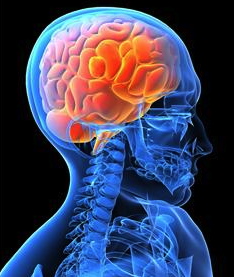
Another involves a brain malfunction. For instance, a loss of brain functionality in, or MH900438746a failure to properly develop, the frontal lobe can lead to violence and murder. The frontal lobe (that part of the brain under our foreheads and behind our eyes) contains the coding for ethics and morality. It’s also the center for impulse control. So any frontal lobe damage or misdirected development can lead to miscues of ethics and moral decision-making, causing improper responses to life’s everyday challenges.
The third reason people turn to lethal violence is abuse. This can be sexual, psychological or physical in nature. Abuse during the childhood years are the most damaging and can lead to psychopathologies later in life. The specific type of abuse, along with the intensity and duration of the abuse, often determines the specific psychopathology that may result.

As one can expect, specific tendencies to MURDER may develop as a result of a combination of these factors. A violent genetic predisposition may play a greater role when a child is abused and yet be inconsequential if the child is the product of a stable, caring family environment. A child with frontal lobe abnormalities may be channeled into a productive life if taught to control improper impulses, but spin out of control in an abusive environment. The combinations are endless, and so are the resulting pathologies and potential murders that can result.

There is no “one size fits all” when it comes to the urge to kill. The motivations andMH900305711 underlying pathologies are as numerous as its methods, but there is one common factor in almost every murder–the killer feels strongly justified, no matter how malicious the act.

Thoughts? Comments? I’d love to hear them!

Posted in a killer gene, About James J. Murray, About Writing, Characteristics of Killing, Characteristics of Murder, Defining Murder, Murder - The True Definition, Murder is Defined, Reasons Why People Kill, Reasons Why People Murder, The Definition of Murder, The Science of Murder | Tagged , , , , , , , , , , , , , , , , , , , , , , , , , , , , , , , , , , | 1 Comment

Using Bacteria for Weight Control

I was browsing through a magazine the other day while waiting in a doctor’s office and came across an interesting article that compelled me to research the subject in greater detail.  The article stated that the types and amounts of bacteria we have in ourMH900408868 intestinal tract help determine if we become fat or remain thin.

It’s an interesting concept to imagine. The article suggested that we might eventually be able to manipulate intestinal microbes to prevent obesity.

Since I hold both a clinical pharmacy degree and an advanced degree in nutrition, the idea of adjusting the microbe mix in our GI tract to control weight sounded bizarre and far-fetched. But as I researched deeper into the subject, the science made sense. Here’s what I found.

The current belief is that being overweight is simply a math issue. If you consume more MH900427691calories than you use, you gain weight. If you consume fewer calories than needed, you lose weight. The science is simple, but the execution is much more difficult—for instance, I can never resist that piece of chocolate cake!

Now we may have a better answer. In 2005, Dr. Jeffery Gordon of Washington University in St. Louis began to investigate the relationship between diet, gut microbial ecology and obesity. By using mice in experiments, he found that the two main intestinal bacteria in mice are the same as in the human intestinal tract: Firmicutes and Baceroidetes.

As his research progressed, he discovered that obese mice had a greater amount of Firmicutes bacteria, while thin mice had more Bacteroidetes bacteria. Armed with this information, the research team gathered two sets of germ-free mice and infected one group with microbes taken from obese mice and infected the other group with bacteria from leaner mice. Both groups were fed the exact same diet.

The results showed that the mice given bacteria from the obese mice gained excessive weight. Specifically, two weeks after exposure to the obese mice bacteria, this group had a 47 percent increase in body fat. Conversely, the group of mice infected with bacteria from the thin group had only a 27 percent increase in body fat.

These results suggest that specific microbes absorb more energy from food and that the microbial mix in our GI tract determines if we gain weight.

In layman’s terms, the microbes associated with obesity required little food and energy to reproduce and thus transferred more calories to the host (more than the host needed to maintain weight). In contrast, microbes that kept the mice thin required far more calories to survive, leaving less for the host mice to process and use for energy. Therefore, these mice remained thin.

These studies, although preliminary and too primitive to extrapolate to humans at thisMB900120995 point, suggest that one person might have bacteria in their intestinal tracts that consume more calories, leaving that person thinner. Whereas, another person might have a different bacterial mix and gain weight by consuming little more than water.

The studies make a strong argument that one day we might maintain our optimal weight simply by adjusting the microbes in our intestinal tracts.

The thought of having that piece of chocolate cake, and even second servings, without having to worry about gaining weight simply makes me smile—and it also makes me hungry for more of that cake!

Thoughts? Comments? I’d love to hear them!

Posted in About James J. Murray, About Medications/Pharmacy, Baceroidetes Bacteria, Baceroidetes Bacterial Studies, Bacteria for Weight Control, Firmicutes Bacteria, Firmicutes Bacterial Studies, Friendly Bacteria, GI Tract Bacteria and Obesity, Intestinal Bacteria and Obesity, Intestinal Bacteria and Weight Control, Intestinal Microbes and Obesity, Intestinal Microbes and Weight Control, Intestinal Microbes to Control Weight | Tagged , , , , , , , , , , , , , , , , , , , , , , , | 4 Comments

DANCING – A Prescription for Health!

This blog subject may be a surprise to those of you who follow my posts on the topic of murder. Today I’m going to deviate from those darker, homicidal issues and talk about another of my passions – Ballroom Dancing.

imageWhy include such a topic under “Prescription For Murder”?  Because this week I’m in Rhode Island at a Ballroom Dance Camp and I’m sure my wife would have murdered me if I didn’t go.  In fact, she might even consider homicide if she knew that I’m hiding out writing a blog rather than practicing my dance steps.

Actually, I love ballroom dancing and believe that I’m healthier and maybe a little smarter as a result.  There’s even scientific evidence to support the “smarter” part of my belief.

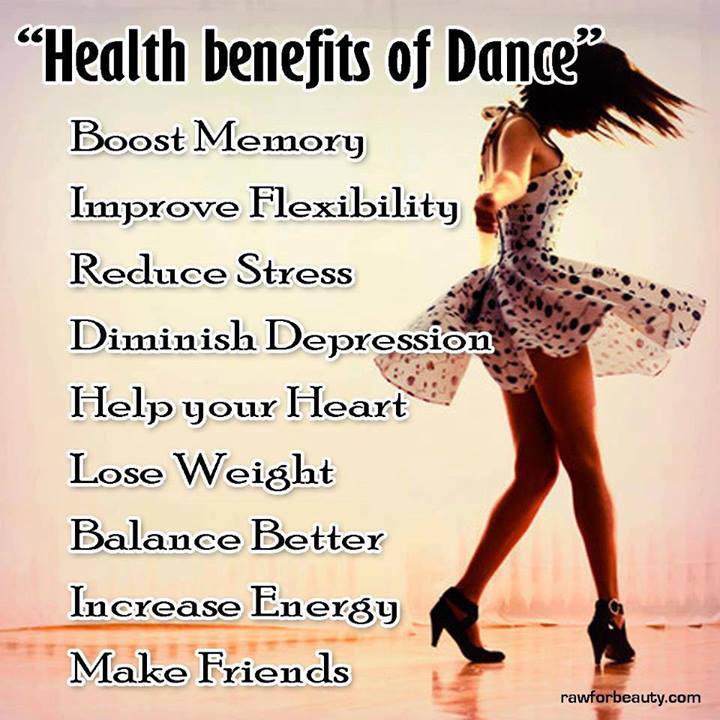
A report in the New England Journal of Medicine stated that dancing was the only physical activity that offered any appreciable protection against dementia.  The statistics were surprising!  Golf offered 0% protection against dementia; reading, 35%; doing crossword puzzles at least four times a week, 47%; and dancing offered the greatest protection at a staggering 76%.

Studies show that dancing stimulates the cerebral cortex (that part of the brain involved in memory, attention and thought processes).  With mental stimulation, the cerebral cortex goes into action and even rewires itself based on need.  Repetitive activities (like a golf swing) don’t offer enough mental stimulation to help the brain remain functional.

When that concept is applied to dancing, it’s been shown that certain dances are betterMH900442887 than others.  All forms of dancing may provide cardiovascular stimulation and benefit our bodies (as is walking that golf course instead of using an electric cart) but the type of dancing that requires us to learn something new and to react continually is the most helpful to our brains.

That means the so-called “lead and follow dancing” (like waltz, foxtrot, swing, cha cha, etc.) may be the best at stimulating the cerebral cortex.  Those dances require split-second decision-making for the leader to direct the partner and the partner to interpret that lead quickly into the next step.

So in addition to keeping us heart-healthy, those rapid-fire dance floor decisions stimulate our brains as well.  And it doesn’t really matter if the dance is slow or fast.  It’s the continued decision-making as to where our feet should go next that makes the difference, even when we’re sure that we have two left feet.

The good news is that, with some practice, we learn – and those two left feet eventually right themselves into graceful dancing.

Thoughts?  Comments?  I’d love to hear them!

Posted in About Dancing, About James J. Murray, Ballroom Dancing, Dancing and the Brain, Dancing for Health | Tagged , , , , , , , , , , , , , , , , , , | 5 Comments

The Scopolamine Patch Nightmare!

Scopolamine, also known as hyoscine and sold as Scopderm Patches, is a powerful drug known in the pharmaceutical world as a tropane alkaloid drug and is classified as an anticholinergic that affects the parasympathetic nervous system. In normal speak, that means, among other things, the drug dries up secretions and prevents intestinal cramping.

Therefore, the drug has many legitimate uses in modern society. In very small doses, the drug is quite effective in treating and preventing motion sickness and is oftenMH900399267 used as a trans-dermal patch for people traveling the high seas on those beautiful cruise ships. In a more clinical setting, scopolamine is used to prevent postoperative nausea and vomiting and to dry up respiratory mucus.

More recently, however, this drug has become an effective tool used by Columbian drug gangs to incapacitate victims and to relieve them of their valuables, their virtue and even their organs while a victim is under the drug’s influence. Last week’s blog highlighted this practice and its growing threat to become a new drug of choice in these unusual criminal acts.

Today, however, I’d like to warn travelers of the dangers of using a Scopolamine patch MH900213135in combination with other drugs and alcohol. Scopolamine is a CNS depressant and can cause confusion, hallucinations, delusions, rambling speech and paranoid behavior. When used in conjunction with other central nervous system depressants (such as tranquilizers, antidepressants, and sleeping pills), the dangerous side effects can be exacerbated to a point that the person begins to act irrationally and becomes self-destructive.

Travelers using the scopolamine patch are usually on vacation, and more alcohol than usual is consumed during this time. It would not be unusual for a person to have several drinks before, with and after dinner while wearing a motion sickness patch. A usual side effect would be an enhanced alcoholic effect and even an amnesiac effect.

Thus, a person using a scopolamine patch in addition to certain drugs and alcohol mightRF246527 have no memory of what happened while under the influence. Thus, a traveler on a fashionable cruise ship might be embarrassed to learn the next morning that he or she was dancing on the tables the night before and being the life of the party.

I remember a particularly interesting traveler on a cruise I took several years ago. There was a woman that my wife and I played bridge with during the afternoons while at sea. She was very refined and even a bit reserved at the bridge table.

In the evenings when my wife and I would go to the night club for some dancing, however, we would see this woman saunter into the club and head straight for the dance floor. Although all alone on the dance floor, she would gyrate her mature hips to the music and cozy up to a pole at one side of the floor and sway in some interesting and suggestive ways.

My wife made a few “Dr. Jekyll-Mr. Hyde” comments about the woman, but I noticed that she was wearing a seasickness patch and had probably enjoyed several glasses of wine with dinner. I’m convinced that she was having a scopolamine-alcohol drug interaction and that the next morning she had no idea that she was the center of attention in the nightclub the night before.

Every afternoon she would return to the bridge table in her usual calm, composed, refined demeanor. But each night she turned into a woman possessed by music and swaying hips.

So, I leave you with a few words of caution and advice. While preventing motion sickness, also prevent unwanted side effects from occurring by cutting down on alcohol, sleep medications and mood altering drugs by discussing these possible drug interactions with your doctor before traveling.

MB900437803Or…you could simply stand by the philosophy that whatever happens on the high seas stays on the high seas~

Thoughts? Comments? I’d love to hear them!
Posted in About James J. Murray, About Medications/Pharmacy, Devil's Breath, Hyoscine, Motion Sickness Drug Patch, Motion Sickness Drugs, Prescription Drug Safety, Prescription Narcotic Overdoses, Scopderm Patches, Scopolamine Adverse Effects, Scopolamine and Amnesia, Scopolamine Drug Interactions, Scopolamine Patches, Sea Sickness Drug Adverse Effects, Sea Sickness Drug Interactions, Sea Sickness Drugs | Tagged , , , , , , , , , , , , , , , , , , , , | 7 Comments

THE DEVIL’S BREATH – A New Drug Threat!

Alternately known as the most dangerous drug in the world and the scariestMH900448711 drug in the world, Devil’s Breath is a powerful drug currently being dealt with on the streets of Columbia. It’s a strong hallucinogenic and an amnesiac. It’s highly addictive and can be deadly. Most importantly, it will only be a matter of time before this drug is making its presence known on the streets of the United States.

Devil’s Breath is usually made into a powder and it comes from the borrachero tree, a article-2143584-130FB037000005DC-752_634x514common tree in Columbia, which blooms with beautiful white and yellow flowers. The drug is said to be so powerful that within minutes of administration, people turn into zombie-like creatures. The victims remain coherent but become child-like and have no free will.

Columbian drug gangs are using this drug, and its interesting side effects, as an innovative and lucrative new business, and stories of victims of these drug gangs are becoming urban legends.

People have been raped, robbed, forced to empty bank accounts, and even coerced into giving up an organ while under the drug’s influence. The drug is odorless and tasteless and is especially easy to administer either by inhalation or ingestion. In large doses, the drug can lead to death.

An often-used method of administration is that the drug is blown into the face of a passer-by on the street. Within minutes, the victim is under the drug’s influence and42-15655456 loses all capacity for rational thinking. The victim is turned into a complete mental zombie and the memory process of the brain is blocked.

While under the influence, the victim is easily controlled by suggestions and verbal commands to perform unspeakable acts. People have even been known to help robbers steal valuables from the victim’s own home or hotel room.

After the drug wears off, victims have no recollection of what happened, what they did under the influence, and cannot even identify the people responsible for administering the drug in the first place.

Interestingly, in ancient times, the drug was administered to the mistresses of dead Columbian leaders. The women were given the drug, told to enter their master’s grave, and they were simply buried alive and forgotten.

As with many botanical substances that are used for illicit purposes, this chemical also has beneficial uses. In fact, the chemical is marketed in the United States under the name scopolamine and hyoscine. Cruise ship travelers might even use this product in the form of a scopolamine patch for seasickness.

Next week’s blog will provide some interesting insights into the legitimate use of this drug and highlight some of its more entertaining side effects. But, until then, don’t let anyone blow into your face on the streets of Columbia.

Thoughts? Comments? I’d love to hear them!
Posted in A New Street Drug, About James J. Murray, About Medications/Pharmacy, Borrachero Tree Drug, Columbian Drug Business, Columbian Drug Trends, Columbian Street Drug, Deadliest Drugs in America, Deadliest Drugs in US, Devil's Breath, Most Dangerous Drug in the World, Scariest Drug in the World | Tagged , , , , , , , , , , , , , , , , , , , , , | 29 Comments

On-Line Pharmacies = Real Life Scams!

We’ve all heard the saying, “ If it seems too good to be true, then it MH900448347probably is.” That certainly applies to the purchase of pharmaceuticals from many on-line pharmacies. Although generic drugs are good economic choices and are acceptable substitutions for brand name drugs, many expensive drugs have no generic equivalents and no inexpensive alternatives.

But if you’re to believe the promotional advertising from many on-line pharmacy sites, you might think this wasn’t the case.  At least several times a day, my computer’s spam filter captures ads for cheap, generic versions of popular, brand-name-only drugs. Since I have a background in pharmaceuticals, I realize these promotions are scams.

However, I often wonder how many people believe those ads and, worse yet, how many fall victim to the pharmaceutical scams. It seems that the FDA shares this concern since in the last month alone, the FDA shut down 1,677 on-line pharmacies.

The reasons for these closures included selling counterfeit drugs or for sellingMH900185047 sub-standard medications without appropriate safeguards. In all, 58 people were arrested and over $41 million worth of illegal—mainly counterfeit—medications were seized, and the sting involved the cooperation of more than 100 countries, according to Interpol.

So what constitutes a counterfeit drug? In years past, counterfeit drugs often contained no actual drug. They were much like the sugar pills we call placebos, the kind that look like the real thing but have no active ingredients.

These days, however, counterfeit drugs may actually contain some active drug, mainly to pass minimal qualitative testing. Counterfeit drugs may also contain toxic ingredients that may seem similar to, but does not work like, the original active drug. In fact, some of these drugs may actually be lethal.

MH900448637While counterfeit drug sales are not isolated to only on-line pharmacies, the FDA has determined that the great majority of counterfeit drugs are introduced into the United States via the Internet.

Some of the more commonly advertised counterfeit drug scams involve Viagra, Levitra, Celebrex, and a few of the more popular cardiovascular medications that are not yet available as less expensive generic alternatives.

The National Association of Boards of Pharmacy recently performed an analysis of more than 10,000 pharmaceutical websites and found that 97% did not fully comply with state and federal regulations, 88% did not require a valid prescription and almost 50% sold medications that lacked FDA approval.

An interesting revelation was that most of these sites were based overseas, even though most presented themselves as Canadian pharmacies. The obvious reason is that U.S. customers seek more affordable medications from our trusted neighbors to the North.  In truth, most of the “Canadian” on-line pharmacy retailers were actually located in China, India and Pakistan.

The telltale signs of pharmacy scams distributing counterfeit drugs include the site not requesting a valid prescription for a drug product that normally requires one and not having a licensed pharmacist available for consultation.

In spite of these latest findings, FDA Commissioner Margaret Hamburg stated,MH900321090 “We still do have the safest drug supply in the world.” Studies indicate that there is less than a 1% chance of receiving a counterfeit drug when purchasing from a legitimate U.S. pharmaceutical retailer. That means, in effect, over 99% of the drugs distributed in the United States are considered safe and within accepted potency standards.

If you wish to shop for pharmaceuticals on-line, my advice is to use only retailers that can be verified to be located in the United States and which are licensed in the state where the website is registered. In that way, you can be assured that the state’s Board of Pharmacy provides oversight of the pharmacy’s distribution policies and practices.

Thoughts? Comments? I’d love to hear them!

Posted in About James J. Murray, About Medications/Pharmacy, Counterfeit Drugs, Counterfeit Drugs and the Internet, FDA and On-Line Pharmacies, Internet Drugs, Internet Pharmacies, Internet Pharmacy Scams, On-Line Pharmacies, Pharmacy/Pharmaceuticals, Prescription Drug Safety, Prescription Trends, The Practice of Pharmacy | Tagged , , , , , , , , , , , , , , , , , , , , , , , , , , | 7 Comments

Foods Can Kill

I often write about poisons and toxins that kill. After all, I write about murder and what better way to kill someone than with a substance that’s lethal but not so easy to detect.

Such scenes make for good fiction reading, but a devastating reality is the fact that normal foods can kill also. We’ve seen news reports of contaminated foods with lethal bacteria being recalled when people become ill MH900406537after consuming them. However, there’s another side to the story of lethal foods.

Food allergies cause minor and sometimes severe allergic reactions, but a recent visit to my allergist convinced me that the problem is much more prevalent than I ever realized. In fact, the statistics are staggering. Food allergies affect over 15 million Americans, and every three minutes a food allergy sends an American to the emergency room.

One in 13 children are included in this category—roughly two in an average American classroom—and nearly 40% of these children have already experienced a life-threatening food reaction, called anaphylaxis.  That means the reaction to the offending food caused a rapidly progressing allergic reaction that, if left untreated, would likely have lead to death. The symptoms include rash development, a weak and rapid heartbeat, plummeting blood pressure, swelling in the oral mucosa and a lethal closure of the airways.

Researchers tell us that the numbers of people with food allergies are increasing at a significant rate—an 18% jump in the decade between 1997 MH900177951and 2007—and that peanut allergies have tripled. Besides peanuts, some of the more common causes of severe food allergies include shellfish, wheat, soy, milk and eggs.

Scientists don’t have definitive answers for why this spike is happening, but there are some viable theories. As America continues to become a “cleaner society”, our children are not exposed to the irritants that older generations encountered and adapted to as they progressed through childhood.

Regarding the rapid increase in peanut allergies, scientists theorize that roasted peanuts may be part of the problem. In other countries with lower rates of peanut allergies, peanuts are often boiled and children in those countries begin consuming the ground-up food at an early age—at a few months old rather than at three or four years old, like in America.

So what do we do with this new information? There are injections that can be Young Woman Thinking --- Image by © Royalty-Free-Corbisgiven to desensitize a person to many environmental allergies—like cedar, oak, dog, cat, etc. But, like many insect allergies, there are no desensitizing injections that are available for food allergies.

Presently, studies are being conducted with children who are highly allergic to specific foods. Small quantities of the offending food are introduced, with progressively larger portions, under controlled conditions in an attempt to desensitize the child to the severe allergy. But these treatments are still in the experimental stages and inconclusive at this point.

In 2012 a new organization was established to address the need for a cure of lethal food allergies. The organization is called Food Allergy Research and Education (FARE) and it was created from a merger between the Food Allergy and Anaphylaxis Network (FAAN) and the Food Allergy Initiative (FAI). FARE combines the expertise of FAAN’s food allergy information resources and programs with FAI’s large private source of funding for food allergy research.

The focus of FARE is initially increased awareness of this growing problem and the need for increased education about the impact of food allergies. But, by combining advocacy at all levels of government with world-class research to advance treatment options, the evolution into finding cure options can begin.

Having lived through a severe, almost lethal allergic medication reaction when I was a child, I have personal knowledge that anaphylaxis is a frightening experience, one that will stay with you the rest of your life.

When a severe food allergy leads to anaphylaxis in a child, the entire family is MH900448407impacted. The best prevention is knowledge and preparation. To that end, every parent should go to Anaphylaxis 101 for a short education in food allergies, what symptoms to look for and what to do if a severe reaction should occur.

Thoughts? Comments? I’d love to hear them!
Posted in About James J. Murray, About Medications/Pharmacy, Anaphylaxis, Children and Food Allergies, Common Food Allergies, Food Allergies on the Rise, Foods That Kill, Lethal Food Allergies, Peanut Allergies, Pharmacy/Pharmaceuticals, Severe Food Allergies | Tagged , , , , , , , , , , , , , , , , , , , , , , , , , | 4 Comments

A World of Possibility!

Available for immediate **FREE** download: c1f003f6481386a17ab2b280a388df4677894877-thumb

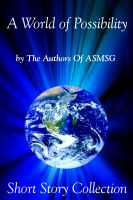
A World of Possibility: A Collection of Twenty-Six Short Stories by the Authors of ASMSG (the international Authors’ Social Media Support Group).

An eclectic offering of short stories ranging from humorous inspirations to the dark and frightening, A World of Possibility presents the work and collaboration of authors from around the globe. It is a collection filled with diversity. You may laugh, you may cry, and you might even look over your shoulder once or twice as you read.

And I’m very happy to announce that my short story “Cuffed” has been included in this anthology. It can be found about a third of the way through the book (on your e-reader, of course).

My hope is that you enjoy my story as much as I liked writing it, and I encourage you to read the other offerings by my talented fellow authors.

I am honored that my work has been included in this collection, and it would not have been possible without the continued support of this fine group of writers.

A World of Possibility is available in all e-formats for immediate download and is being offered free for a specific period of time.

Please find it at Smashwords and order it today by clicking the following link:

Smashwords: https://www.smashwords.com/books/view/332025

AND, if you really enjoyed the collection and wish to comment, please take a moment to write a brief review. Good or bad, a writer thrives on feedback!

Thanks for your continued support of my weekly blogs. Please know that it is much appreciated, and that I’ll have more SINISTER things to talk about in the coming weeks. So stay turned.

But for now…click on that Smashwords site and download the book for a wonderful adventure in reading!

Posted in "Cuffed" by James J. Murray, A World of Possibility, About James J. Murray, All About Writing, ASMSG, ASMSG Anthology Collection, ASMSG Short Story Collection, Authors' Social Media Support Group | Tagged , , , , , , , , , , , , , , , , , , , , , , , | 7 Comments

Happy Fourth of July!

MH900177764

Citizens of the United States (including me) celebrate the anniversary of their independence on July Fourth. This year is the 237th anniversary of the development of our free nation, and it reminds me of the great sacrifices our forefathers made so that we could live a life of prosperity and have the freedom to choose how we want to live.

These same freedoms allow me to have this blog site to expound on various thoughts and subjects without fear of persecution. As I see news reports of demonstrations against tyranny around the world, I feel privileged to live in a nation that protects individual rights and freedoms and which encourages exploration of new ideas and alternate lifestyles.

But that right and those freedoms come with a responsibility to do all we can do to further the philosophy of our forefathers so that our children and future generations have the same freedoms and rights that we now enjoy.

Particularly on this momentous holiday, we have the responsibility to do something very important and timely. We can protect and maintain our environment as we celebrate by keeping in mind a few of the tips offered by conservationist Jeff Corwin.

These include recycling and reusing plastic cups and utensils, or by buying 100% biodegradable products. We can also be mindful of littering. Plastic bags and six-pack holders can injure animals that ingest them. And lastly, illegal or improperly used fireworks are the leading cause of wildfires that can easily destroy fragile ecosystems and end lives.

My wish is for you and your family to enjoy this wonderful summer holiday and to have a safe celebration experience.

I’ll return in a couple of days with some very exciting news and next week with more serious subject matter, but until then:MH900156721

HAPPY FOURTH OF JULY!!

Posted in About James J. Murray, About Medications/Pharmacy, Fourth of July, Fourth of July Celebrating, Freedom in the United States, Happy Fourth of July, US Independence Day | Tagged , , , , , , , , , , , , , , | 4 Comments

Mysteries vs Thrillers

A few years ago, mysteries were the hot genre. It seemed as if everyone was reading a mystery novel. The thrill of guessing, MH900427785“Who done it!” was the excitement that kept me, and many others, reading book after book.

More recently, however, thrillers make up a greater portion of the bestseller lists. The passion for solving the puzzle of a mystery, even a murder mystery, is taking second place to the thrill of the chase between the protagonist and the antagonist.

This evolution is subtle but the psychology behind the shift is not. In order to fully explain this, allow me to take a step back and explain the basic differences in these genres.

A Mystery Novel:  These stories involve a puzzle, a specific unknown that the reader isn’t expected to know about until MH900385446the end. Mysteries are often more cerebral and are considered works of revelation. There’s more mental action than physical in a mystery. The primary action (or crime) has already occurred, so the element of suspense is not necessarily the main focus of the novel. It’s in solving the puzzle.

A Thriller Novel:  These stories involve intrigue and action. A catastrophic event may have happened, as in a mystery, but a thriller differs in that the event triggers the possibility of an even greater catastrophe. In a thriller, the protagonist’s job is to prevent further calamity.

If the above explanation is about as clear as mud, then let me explain further. Various charts have been developed that characterize these types of novels as follows:

Mysteries   ═►  Suspense Novels   ═►  Thrillers

The main difference is in the delivery of suspense. Mysteries let the reader know up front that something bad has happened, but the reader doesn’t know who the villain is. The reader must plow through to the end of the book, or be very clever at identifying the clues along the way, to find out who the antagonist is. The mystery of “Who done it!” is not revealed until the end.

In a thriller, however, the writer is appealing to the emotions of the reader who yearns for excitement. Thriller plots createMH900443241 a desire to confront extreme danger and defeat nasty villains. This differs from a mystery in that the reader is informed at some point early on who the villains are.

The thrill does not revolve around solving the mystery because we already know who the bad guys are. The excitement is the heightened emotions brought on by the chase—the literary dance that happens between the hero and the villain when you’re not really certain who will win.

It’s been said that the threat from an unknown source is never as great as a known, villainous danger. There’s much more suspense when we know what our hero is up against but can’t quite figure out how the hero will either survive, eliminate a specific threat or save the world. The key word here is SUSPENSE. It’s both the link and the difference between mysteries and thrillers.

A mystery may have a degree of suspense, but the storySignature-baed3687aecc9fc02b05e033f52ab04b5ac34144c6f0702c4e0cfe36f9d34041 progresses logically toward a resolution of the puzzle and this stimulates the mind. A thriller, on the other hand, stimulates the senses as well. The emotional rush of apprehension and exhilaration imbedded within the plot of a thriller drive the narrative at a constant, and at times a breakneck, pace. The SUSPENSE is heightened by the known threat of the villain and his/her unexpected actions.

Author L.J. Sellers states the difference between mysteries and thrillers a bit uniquely. She explains that in a thriller, the villain drives the story, whereas in a mystery, the protagonist drives the story. It’s an interesting explanation that brings me back to the idea that it’s the degree of SUSPENSE that distinguishes these genres.

SUSPENSE happens when the protagonist is in danger. In a pure suspense genre novel, the protagonist becomes aware of the danger only gradually and the suspense builds slowly as the story unfolds. Thus, the relationship among the mystery, suspense and thriller genres become somewhat blurred.

But the basic premise of protagonist danger and degree of suspense defines what genre a book falls into. In mysteries, the main character is occupied with tracking down the truth about an event, often a murder, but the protagonist is in relatively little danger. In thrillers, however, the protagonist is often in danger from the onset or is placed in jeopardy by his actions and/or that of the antagonist.

So, which are my favorites? See my website and you’ll know. And I hope they’re your favorites also.

Thoughts? Comments? I’d love to hear them!

Posted in About James J. Murray, About Writing, All About Writing, Blogging, Difference Between Mysteries and Thrillers, Mysteries and Thrillers Compared, Mysteries Vs Thrillers, Role of Suspense in Mysteries, Role of Suspense in Thrillers | Tagged , , , , , , , , , , , , , , , , , , , , | 3 Comments