Pharmacy Recall Epidemic

In November 2012, I wrote a blog about an outbreak of fungal meningitis that resulted from poor quality control procedures at a Massachusetts compounding pharmacy. It was first reported in September of that year, but MH900315511evolved into national news because of the alleged horrendous breech in the pharmacy’s compounding practices. The news headlines continued for months as a few isolated illnesses exploded into 419 cases and more than 30 deaths.

Recently, more compounding pharmacies have been in the news for poor quality control issues. A Georgia compounding pharmacy recalled all of its sterile products after the Food and Drug Administration (FDA) documented concernsMH900422227 about the safety of the products shipped from there. The alarm focused on sterile eye drops prepared at the facility. Cases of endophthalmitis, a serious eye infection that can lead to blindness, were traced to the eye drops prepared in and shipped from this pharmacy.

That was the second specialty pharmacy in a week to recall products based on MH900308900public safety concerns. Earlier, a New Jersey compounding pharmacy recalled all of its products after mold was discovered in bags of magnesium sulfate used to make their sterile preparations.

Compounding pharmacies are specialty practices that create drug formulations based on individual patient needs. Such products historically are prepared on a “made-to-order basis”, usually because available commercial products are not appropriate for the patient. A number of reasons could trigger a special patient need from a compounding pharmacy.

A patient may be allergic to a preservative in a commercially available eye drop and therefore the physician might order a compounding pharmacy to prepare a sterile formulation without any preservative. Or a patient might require a dose concentration that isn’t available in a ready-made product (such as, a much lower or higher concentration than available from a drug manufacturer).

Essentially, compounding pharmacies are the modern version of ancient chemists who created medicines from plants leaves and roots. The coal tarMH900285516 compounds of the 19th century and the primitive sulfa antibiotics of the early 20th century are examples of such compounding practices.

There are many fine, reputable compounding pharmacies all across the United States. Unfortunately, it only takes a few “bad apples” to spoil the reputation of the entire professional category.

The pharmacies that seem to make the news are those compounding facilities that expand well beyond their traditional roles of preparing individual MH900402697prescriptions for individual patients. When a compounding pharmacy distributes hundreds and thousands of drug doses to multiple clinics outside of its local geographic community, they begin to function as drug manufacturers—but without the scrutiny of the FDA.

Compounding pharmacies are licensed and regulated by each state’s Board of Pharmacy. The FDA regulates only drug manufacturing facilities, not pharmacies. When a compounding pharmacy prepares drug doses in massiveMH900321072 quantities for widespread distribution, that entity is operating outside of the laws of pharmacy practice and begins to function as a drug manufacturer, albeit without FDA approval for drug manufacturing.

A recent article by Liz Szabo in USA Today quoted Janet Woodcock, director of the FDA’s Center for Drug Evaluation and Research. Ms. Woodcock stated, “Health care professionals should ensure that any medicines they administer to patients are obtained from appropriate, reliable sources and are properly administered.”

I could not have said it better myself! Physicians and clinics that don’t use local businesses for drug compounding invite potential disaster. Compounding pharmacies are not drug manufacturers. When such pharmacies choose to function as drug manufacturers and operate without proper regulatory approval, they do so at their own peril, as well as the patients they serve.

Compounding pharmacies are a highly valued specialty in pharmacy practice and provide a much needed service. But, when they operate outside of their legal parameters, it’s a Prescription For Murder.

Thoughts? Comments? I’d love to hear them!

Posted in About James J. Murray, About Medications/Pharmacy, Compounding Pharmacy, Compounding Pharmacy Deaths, Compounding Pharmacy Disasters, Meningitis Outbreak, Our nation's drug supply, Pharmacy/Pharmaceuticals, The Practice of Pharmacy | Tagged , , , , , , , , , , , , , , | Leave a comment

Bee Venom Kills HIV

In the past few weeks I’ve presented two blogs on various drug resistant MH900407492bacteria. The first was on March 13th about “Super Bugs” and another on March 20th about “Deadly CRE”. These hardy bacteria are a growing concern worldwide since they have the ability to evolve to a point that traditional antibiotics are no longer ineffective against them.

Unfortunately, the same type of microbial evolution occurs with viruses. It happens with viruses that cause the common cold, with flu viruses and even with more deadly viruses, like HIV.

In regard to HIV, drugs have been developed to prevent the virus fromMH900448470 replicating and, therefore, the survival rate of AIDS has dramatically increased in recent years. But eventually the AIDS virus, like the bacteria previously discussed, evolves to evade potent medications.

The good news is that research scientists at the Washington University School of Medicine in St. Louis, Missouri have discovered a new, innovative approach to viral infections, even resistant ones—It’s Bee Venom!

MH900438018Scientists have found a key ingredient in bee venom that destroys HIV without harming surrounding cells. The bee venom is named mellitin, and researchers have loaded the toxin on nanoparticles structured with bumpers (think of cogs or gears on a wheel).

Normal cells bounce off of these nanoparticles because they’re too large to getMH900391212 caught between the bumpers. The HIV virus, however, is small enough to fit between the bumpers and make contact with the surface of these nanoparticles. And that’s where the bee venom (mellitin) is placed.

The mellitin fuses with the viral shell, called the viral envelope, and causes it to rupture; thus, it renders the virus inactive.

The difference between this technique and existing anti-HIV drugs is that those drugs don’t prevent the initial infection. Their mechanism of action is to inhibit the viruses’ ability to replicate. Eventually that mechanism becomes inactive because viruses are as smart as bacteria and evolve to evade the drug’s lethal action.

Mellitin is a much different approach in that this venom attacks the inherent structure of the virus. In effect, mellitin pokes holes in the protective envelope that surrounds HIV.

The implications for treatments are phenomenal. Treatments could be developed MH900448461for drug-resistant HIV infections. These remedies could be delivered intravenously to potentially clear HIV from a patient’s blood. And the venom-infused nanoparticles could be added to topical (vaginal, anally, etc) gels to prevent the initial infection.

And the news gets even better! The bee venom potentially could be effective against other viruses since the majority of them are minute particles that fit between the nanoparticle bumpers. Since mellitin attacks double-layered membranes (such as, viral protective envelopes) indiscriminately, other viruses could be killed with this potent bee venom.

That means we may be on the verge of actually killing viruses as never before. Researchers state that the nanoparticles are easy to make and enough bee venom could be extracted to begin clinical trials very soon.

Potentially, the only limiting factor would be obtaining enough bee venom to mass-produce the therapy, and bee populations are declining around the world. One study suggests that the US and UK have lost a third of their honeybee population since 2010 and that the die-off is spreading to other highly populated countries, including China and India, in a phenomenon called colony collapse disorder (CCD).

Barring a shortage of bee venom, however, the implications of this new medical approach are that other viruses, such as Hepatitis B and C, and even the cold and flu viruses, could be treated with venom-loaded nanoparticles and used in the MH900444636same way we cure bacterial infections with antibiotics.

BUT in this case, the viruses would have no mechanism to evolve and become resistant to therapy. What a refreshing and long-awaited win for mankind that would be!

Thought? Comments? I’d love to hear them!

Posted in About James J. Murray, About Medications/Pharmacy, Bee Venom, Bee Venom Research, Bee Venom Therapy, Curing HIV with Bee Venom, Curing HIV with Mellitin, Curing Viral Infections, Drug Resistant Viruses, Mellitin, Mellitin Research, Mellitin Therapy, Pharmacy/Pharmaceuticals | Tagged , , , , , , , , , , , , , , , , , , , , , , , | 10 Comments

Visine as a Deadly Poison?

A couple of weeks ago I wrote a blog: “How to Write a Bloodless Death MH900443021Scene”. The purpose was to stimulate ideas about how to write interesting murder scenarios. I had listed the most obvious ones and a couple of readers offered additional suggestions.

I thought we had covered the topic completely, but I was wrong. Just when I was sure we had discussed all the different ways to kill someone without shedding blood, a new method recently cropped up in the news—Visine!

MH900329183Yes, those eye drops that we all use to “get the red out”! Amazingly, the news feature was about a woman who is accused of poisoning her boyfriend by adding Visine to his drinking water. She allegedly added a substantial amount to his drinks “10 to 12 times since 2009” in order to “get his attention”.

The deed was discovered after the boyfriend visited his doctor several times complaining of chronic nausea and vomiting, as well as blood pressure and breathing issues. The treating physician, apparently after traditional treatments failed, ordered a blood test and discovered an “extremely high level” of tetrahydrolozine in his blood.

Tetrahydrolozine is a vasoconstrictor (it shrinks blood vessels) and is the active ingredient in a number of eye drops and nasal sprays. Eventually, the girlfriend was confronted and admitted to spiking his drinking water with Visine.

She was arrested and charged with 10 counts each of simple assault, aggravatedMH900400849 assault and reckless endangerment. She’s currently free on $75,000 bail, but if convicted she could face up to 240 years in jail and fined up to $300,000.

When I looked up “tetrahydrolozine poisoning”, I found a term called Visine Prank. One of the symptoms of oral intake of tetrahydrolozine is diarrhea. That certainly would make for an interesting, if not dangerous, prank!

As I continued to read, I discovered that oral ingestion of Visine, and other eye drops containing tetrahydrolozine, can cause much more serious side effects than diarrhea. If large quantities are ingested, serious illness and even death can result.

The common side effects are headache, blurred vision (maybe Visine would help MH900040199with that?), nausea and breathing problems. In extreme cases, seizures and/or a coma could result, with death following closely behind.

Some of the more unusual side effects include low body temperature, tremors, nervousness and irritability. The most unusual side effect listed was blue fingernails and lips, and I think that would make for an interesting discovery by an MH900448636observant medical examiner in your novel.

To prevent death, aggressive treatment must follow closely after a large ingestion of the substance. Administering laxatives, inducing vomiting, pumping out the stomach and breathing assistance would be the expected treatments.

So I hope you’ll do as I’m doing—adding yet another bloodless method of killing to my lengthening list. At the very least, spiking a character’s drink with eye drops might be an interesting way to take that character “out of commission” for awhile.

Thoughts? Comments? I’d love to hear them!

Posted in About James J. Murray, About Medications/Pharmacy, Bloodless Death Scene Writing, Bloodless Death Scenes, Drug Poisoning, Our nation's drug supply, What writers are called!, Why People Kill, Writing Dialogue, Writing Labels, wrLapinsky | Tagged , , , , , , , , , , , , , , , , , , , , , | 10 Comments

The Deadly Invasion of CRE

In last week’s blog I discussed “superbugs”, a term given to bacteria thatMH900439333 evolve to become resistant to some of the most commonly-used antibiotics. Drug resistant bacteria are a growing concern among healthcare professionals and the causes are partially related to overuse of antibiotics in our environment.

Today, I’d like to focus on one specific “superbug”, Carbapenem-Resistant Enterobacteriaceae, or CRE for short. It’s a deadly organism that resists treatment and is on the rise worldwide.

Enterobacteriaceae are microbes from a family of bacteria causing such common ailments as respiratory, intestinal and urinary tract infections.

Carbapenem is an antibiotic that has been used in the United States since 1985. MH900448701Bacterial resistance occurs when specific bacteria evolve to develop an enzyme that makes them resistant to carbapenem. Such resistant infections are labeled as CRE.

CRE is difficult, and at times impossible, to treat since carbapenem is often the drug of last resort for certain bacterial infections, including e-coli and some pneumonia varieties.

Bacterial resistance to carbapenem was uncommon until about ten years ago.MH900202069 Since then, there has been a four-fold increase in resistance to treatment. When resistance occurs, there are simply no other antibiotics effective against these infections, and the mortality rate for CRE has been reported as high as 50%.

The Centers for Disease Control and Prevention (the CDC) estimated that almost 92% of CRE occurs during hospitalization. That makes healthcare institutions the primary focus for prevention.

In 2012, the CDC developed a CRE Tool Kit for healthcare professionals and institutions to provide guidelines for prevention. The top four facility-level prevention strategies included hand hygiene (alcohol-based hand rubs), patient contact precautions, education of personnel and the proper use of devices associated with CRE (such as, venous and urinary catheters).

MH900178467When a New York area hospital implemented the CDC’s CRE guidelines, that hospital reduced the occurrence of CRE by 50%. The country of Israel implemented similar guidelines in all of its 27 hospitals and reduced the incidence of CRE by 70% in one year.

CRE is on the rise! The CDC states that it is spread by improper hand sanitization, casual contact with affected patients, and the indiscriminant use ofMH900427619 medical devices. The spread takes on regional significance when affected patients receive care in several different healthcare settings—such as, transitioning from a hospital to a short-term or long-term care facility. In this way, the affected patient contaminates several facilities with the same antibiotic-resistant infection.

The simple solution is for healthcare institutions to follow the CDC’s guidelines for hand and device hygiene and to implement proper patient contact precautions. Although CRE will not be eradicated until new, more effective antibiotics are available, the incidence of CRE would be greatly reduced.

Thoughts? Comments? I’d love to hear them!

Posted in Antibiotic Overuse, Carbapenem Resistant Bacteria, CRE, Drug Resistant Bacteria, Pharmacy/Pharmaceuticals, Superbug Epidemic, Superbugs | Tagged , , , , , , , , , , , , , , , , | 13 Comments

Super Bugs = Super Killers

We perceive bacterial infections to be little more than a nuisance—with a MH900430501simple fix of taking an antibiotic for a few days and then we’re back to feeling one hundred percent. Fortunately, that’s usually the case.

Certain bacteria, however, have become resistant to many commonly used antibiotics and that can make these little bugs much more ominous. When infectious bacteria become resistant to treatment, they’re labeled as SUPERBUGS.

The SUPERBUG phenomenon occurs with overuse or improper use of antibioticMH900407492 therapy, and the problem isn’t confined to hospitals or other institutional settings. Simple infections of the skin, urinary tract, ear and lungs are increasingly more stubborn to cure and often require stronger antibiotics than in the past or require combinations of drugs.

New strains of the most well known superbug, MRSA (Methicillin-resistant Staph aureus), are attacking people outside of health care facilities and causing very aggressive infections that are difficult to cure.

The U.S. Centers for Disease Control and Prevention (the CDC) in 2010 estimated that MRSA caused serious infections in over 82,000 patients and killed over 11,000 of them. It has been noted that the elderly are the most susceptible to contracting a superbug.

So just how have we humans allowed these tiny organisms to get stronger and become so difficult to battle? The simple answer is that we’ve saturated our environment with antibiotics, the same amazing drugs that were created to fight bacterial infections. And it’s not just healthcare professionals who are to blame.

While over 7 million pounds of antibiotics are sold for human use each year, over MH90014442429 million pounds are sold for use in food animals. Experts argue that animal injections or adding antibiotics to feed stock represent a gross overuse of antibiotic drugs and that this makes the drugs less likely to work when we need them the most.

Bacteria exist in astronomical numbers in our environment. They reproduce rapidly and evolve readily to pass genetic traits—including antibiotic resistance—to succeeding generations as well as to other bacteria. The more bacteria encounter an antibiotic, the more readily they cultivate hardier versions of themselves capable of overcoming a drug attack.

Researchers tell us that there are several actions that can be taken to minimize bacterial antibiotic resistance:

1)   Make sure your doctor knows that you only want an antibiotic if it’s absolutely necessary. Inappropriate prescription use for simple coughs and coldsMH900401001 are the number one problem area for antibiotic use. Medical professionals estimate that only one in five infections require antibiotics. The great majority of infections are due to viruses, not bacteria, and an antibiotic is ineffective against viruses.

2)   When appropriately prescribed an antibiotic, take all the medication—even if you feel better. In that way, the drug will completely eradicate the offending bacteria rather than merely weaken the organisms.

3)   Consider buying meat raised without antibiotic use. Experts agree that less antibiotics in food animals will slow the development of resistant bacteria.

4)   Use simple soap and water frequently to clean hands rather than an antibacterial soap or cleanser. Just as with animal feeds, the use of antibiotics in cleansers can foster the emergence of resistant bacteria.

Increased casual use of antibiotics is a global phenomenon, and it causes a greater degree of bacterial resistance to currently available antibiotic therapies.

SUPERBUGS are on the rise! Resistance is produced and enhanced by the misuse of antibiotics.

The simple solution is to remove indiscriminate use of antibiotics from our environment, and that’s a responsibility our government, agricultural and healthcare professionals must shoulder. But we, as individuals, must share some of that responsibility.

Thoughts? Comments? I’d love to hear them!

Posted in About Medications/Pharmacy, Antibiotic Overuse, Antibiotics in Agriculture, Drug Misadventures, Drug Resistant Bacteria, MRSA, Pharmacy/Pharmaceuticals, Superbugs | Tagged , , , , , , , , , , , , , , , , , | 10 Comments

Author Interview and Excerpt: “The Clearing” by Thomas Rydder

Today I’d like to introduce a fellow writer and friend, Thomas Rydder, who has just launched his debut novel: The Clearing.

The following is some information about him and his novel. Check out his various sites in the “Stalk The Author” section at the end of this post and then click on the sites listed to order his book. He’d appreciate that!

So now about Thomas Rydder and The Clearing:

I’m married to a beautiful woman who shows me the glorious side of life on a 092a98efdaily basis, have a 15-year-old son who manages to be an athlete, socialite, and an honor role student all at once, and own two dogs and two cats who are all mischievous and precious at the same time. In my spare time, I also59785_229140513891033_677629800_n enjoy fishing, reading, genealogy, sightseeing through Charleston, the beach, and watching my beloved Pittsburgh Steelers. “The Clearing” is my Debut Novel.

**************************************************************

Tell us a little bit about the everyday ‘Thomas Rydder’ – what is he like when he is not writing.

He’s a guy who’s had what could be called a tumultuous life. Never boring, but sometimes a bit more dramatic that he’d have liked. Now that life has settled down significantly, he’s content to enjoy evenings at home (or out) with his beautiful wife, spoil his cats and dogs, sip a rum and coke, enjoy a good cigar, do a little volunteer work at the feral cat refuge…and slip in some fishing from time to time. Oh… and write, always remember that 🙂

When did you first realize that you wanted to write? What was your first attempt like?

I kinda tripped over writing. I was poking around for something to do in my spare time. See, I’ve always like creating stuff. I sang in a group way back when, played the trumpet in the Marines for awhile, even did some genealogy of a couple limbs on my family tree. So, I was seeking another way to express myself. Now, there are a few ex-high schoolers that owe their English comp grades to me, and my wife knew that. So, she suggested I try writing. I joined a little site called Hubpages – quite a nice place for aspiring authors, by the way – and started giving it a go. Wrote a short story that got some good feedback, then started another. For some reason, it just kept growing, and last Friday, it launched as “The Clearing.” How’s that?

What was the inspiration for The Clearing?

This is going to sound odd, but I have no idea. This isn’t exactly something I’d recommend to anyone – and since reading up on the “do’s” and “don’ts” of writing, I now realize that it was very risky – but I just started writing. I’ve always loved the supernatural, so it wasn’t difficult what I wanted to write about. After awhile it turned into a book. No outlines, no character sketching, none of that. Looking back on it, it’s amazing the thing even got published…

Tell us a little about the book, and where it’s available.

“The Clearing” takes place in a small town in southwestern Pennsylvania. Through a series of grisly events, the residents come to realize they have some unwanted – and very dangerous – visitors. (The full moon on the cover might give potential readers a hint as to what kind of visitors.”)  They have to rid their peaceful little burg of these new arrivals – and prevent one of their own from becoming one.

It’s available both in Kindle format, and also paperback at:

Kindle

UnitedStates I TheUnited Kingdom I Canada 

Paperback on Amazon

United StatesThe United Kingdom

Paperback on Smashwords

How would you introduce the protagonist to your prospective readers?

Sheriff Frank Cutlip. He’s lived his entire life in an orderly fashion, and is a career Marine. Now that he’s retired and living back in his home stomping grounds, he just wants to be the sheriff, give out some tickets, and enjoy a quiet life. It doesn’t exactly turn out like that.

Is there a personal quirk that you have given to one of your characters? If yes, then what is it and who did you give it to?

There are a few of them that have quirks, but I think my favorite is farmer Dan Wigand. He’s a big fellow, has a huge heart, but he’s also very headstrong and loud, and he tends to take over a situation that he’s involved in.

Do any of your personal favorite authors influence your style of writing? If yes, then who and how?

Dean Koontz, without a doubt. He’s a master at picture painting, in bringing the reader into the scene so it seems you are standing on that street corner – or watching that fang-dripping, snarling beast creep toward you. He’s unparalleled, as far as I’m concerned.

Time for Top 3:

Books : The Watchers, all of The Rook Series, and Shogun

Authors : Dean Koontz,  Graham Masterson, and  James Clavell

Actors: Jack Nicholson, Clint Eastwood, and  Anthony Hopkins

Artists (Music/Art) :  Luciano Pavarotti, ZZ Top, and Sting

Things on your Bucket List :

#1 Hands down: vacationing in Australia with Denise

#2 Going on a ghost hunt with the Sci Fi Channel’s “Ghost Adventures” crew

#3 Doing a multi-state trip over the course of a few months on the back of a Harley Electra Glide

What is the one thing that you wish that every reader would take away from your novel?

Heroes are everywhere. They don’t always wear capes, they are just as afraid as anyone else, and there’s no pictures next to the term “hero” in the dictionary. Being a hero just means conquering your fear and refusing to give up.

Anything else that you would like to tell to the readers, both who have read and are about to pick up a copy?

I think what I like best about the story is there aren’t any heroes in it that are familiar with guerrilla tactics and martial arts, or ripped with muscles. As my publisher said, it’s “Ordinary people thrown into extraordinary circumstances.” Here’s an excerpt:

An eerie howl split the night air. It seemed to go on forever, rising in pitch and holding, before slowly falling off. Beth felt the hairs on the back of her neck stand up, and Lizzie stood frozen, staring up into the hills. Beth had completed her graduate work in the Gila National Forest of New Mexico, and had heard her share of coyotes yelping.

This wasn’t a coyote.

The howl was stronger—almost demanding—and lacked the mournful tone of a coyote’s lament. Flapjack whined then sprang up to pace back and forth, hunching his shoulders and sniffing ceaselessly. Another howl burst forth, this one closer.

Keeping her eyes on the dog, Beth commanded, “Honey, go inside. Everything is fine, but I think you should go in for a minute.” A third howl cut off any protest the youngster might have made, and the slamming screen door was evidence of her compliance. Turning her attention back to the woods line, Beth considered the agitated canine. “Come on, boy. Let’s go inside. We got enough bugs tonight, anyway.”

Suddenly, a faint rustling came from just inside the trees, and as her eyes snapped toward the sound, she could swear she saw a shadow flitting by an opening. Flapjack’s whimpering elevated and he was now standing with ears up. Suddenly, he bounded forward and cleared the fence in one leap. Beth scarcely had time to scream “Flapjack!” before he disappeared into the blackness of the forest.

After twenty years in the Marine Corps, Major Frank Cutlip comes home to the quiet hills of his beloved Pennsylvania to take up a new life as the sheriff of Allegheny County.

Professor Beth Lowe took up a post at Paxton University because she became enamored with western Pennsylvania’s charms, a more enduring love than she thought she would ever feel for a man. When Beth’s dog is savaged by wolves, their peaceful lives are shattered, and their fates entwined. On the brink of death, the dog not only survives but grows larger… and more vicious. A thousand-year cycle of carnage is reaching its climax once more, and the peaceful wooded hills will soon be smeared with blood.

Sheriff Cutlip leads his community in a hunt for the hidden terror, but then his own brother is bitten, his blood corrupted by the ancient evil. The sheriff must confront terrible choices, and he can’t do so alone

The Clearing — a novel of ordinary people thrown together in extraordinary circumstances.

5 Little known Facts about the Book/Characters/Influences while writing the book

It’s set in a version of my hometown of Apollo, Pennsylvania

Every character in the book shares either a first or last name with someone I grew up around.

My little hometown has exactly the same number of policemen as the book has. And one less patrol car.

I studied quite a number of lycanthropy legends in order to fashion the plot. I also sprinkled some of those facts as information one character shares with another while also performing research.

Sheriff Frank Wigand is an ex-Marine (no such thing, actually) because I am, too.

Stalk the Author

Website I Facebook I Twitter I Pinterest I Goodreads

Posted in About Author Thomas Rydder, The Clearing - A Novel | Tagged , , , | Leave a comment

How To Write a Bloodless Death Scene

The storyline for the novel I’m currently writing calls for one of the characters to be murdered. Simple enough! Shoot or stab the person, or usewp81d8551f_05_06 a dozen other ways to kill off the character. But that didn’t fit with the storyline. It was important that the killer not leave ANY blood at the crime scene, ESPECIALLY the victim’s! So what method would I use to accomplish that?

My research led me to some interesting ideas on how to construct a bloodless murder scene, and I’d like to share a few of those with my fellow crime fiction writers. The following is a list of the more interesting and believable ways to accomplish this task:

The Temple Blow – The skull is thin there and the temple bone shatters MH900442299easily. More importantly, the middle meningeal artery is located there. Rupture that and you cause a build-up of blood and brain compression. That’s called an epidural hemorrhage. It’s very effective and without external blood loss. Death will follow if the pressure from the blood is not relieved in a relatively short amount of time after the trauma.

The Russian Omelet – Cross the legs of your enemy and pin him to the ground chest down. Then push the legs up toward his back and sit on them to fold and break the base of the spine. It’s usually fatal. The killer, however, should be of “substantial” weight to make this a believable kill method.

An Airborne Toxin Release – There are any number of good choices, from a viral toxin to a lethal poison. A simple Internet search can fuel the imagination.

An Insulin Overdose – Insulin is the hormone secreted from our pancreas whenever we consume sugary or starchy foods. It transports blood glucose intoMH900308894 our cells so that it can be used as fuel. Too much insulin causes low blood sugar and this leads to a variety of symptoms (shaking, sweating, blurred vision, seizures and coma) before death. Describe the symptoms properly and you’ve got a great murder scene.

Carbon Monoxide (CO) Poisoning – It’s a simple way to kill, but not very imaginative. Lock someone in a garage with a car running and soon the carbon monoxide build-up will kill because it replaces the oxygen in blood. Additionally, there are products that kill in the same way as CO. In a murder scene I wrote recently, I used an organic solvent that preferentially binds to hemoglobin instead of oxygen, creating the same effect as CO. It proved to me once again that there’s no substitute for good research when writing creative, interesting murder scenes.

Ethylene Glycol – This is the main component of antifreeze. It’s colorless, odorless, sweet tasting and it’s easy to add to most any food or drink. It rapidly absorbs in our GI tracts and it distributes throughout the body, creating a variety of toxic effects. The initial symptoms mimic a drunken state, but kidney failure usually causes death. Interestingly, alcohol is the antidote of choice. Maybe the KILLER should down the shot INSTEAD to celebrate a good kill!

Strangulation – A dramatic death for sure, but it’s been used A LOT. It causes death in one of two ways: compression of the carotid arteries and/or the jugular veins, and it deprives the brain of oxygen. It can also fatally compress the larynx and/or trachea to prevent air intake.

A Fatal Drug Dose – Any number of drugs (both legal and illegal) could be ???????????????????????????????????????used, but the most rapid effects are gained if the drug is injected. I recently blogged about what drug makes the perfect murder weapon and will talk more about that in future blogs.

The Adam’s Apple Crush – This is a hit to the larynx and a prime strike pointMH900443021 to cause death if you connect dead center and with substantial force. It makes a great kill scene for those Special Forces type characters. The knuckle punch or a strategic kick closes the airway and denies the ability to draw in air. Oxygen deprivation results in death.

These are just a few of the more interesting murder methods to add to your crime research. I’m sure you’ve come across others. Want to share them with us?

Thoughts?  Comments?  I’d love to hear them!

Posted in About James J. Murray, Bloodless Death Scene Writing, Bloodless Death Scenes, Drug Poisoning, Drugs Used For Murder, The Art of Writing, The Psychology of Murder | Tagged , , , , , , , , , , , , , , , , , , , , , | 7 Comments

I’m a Writer – No Other Label Needed!

I started my professional career as a pharmacist: a graduate pharmacist first, MH900406754then a registered one, and then a clinical one.

Those labels defined not only who I was, but it described in a single word what I had achieved.

After graduation, I had to endure grueling oral and writtenMB900409125 tests to become registered. Then came an advanced degree and more arduous tests so that I could attach additional adjectives to my job description, and additional alphabets behind my name. It was the right of passage into ever-smaller clubs of achievement.

When I retired from pharmacy and decided to become a fiction writer, I thought I was done with labels. I looked forward to being “just a writer” and spending my days devoted to creating art with words. But reality crept back in and those pesky labels materialized again.

“What type of writer are you?” I was asked. “A novelist”, I answered. After all, I had finished a manuscript that people said was very good. That answer, however, gave the impression that I was published.

After attending a number of writing seminars and conferences, I realized that my answer gave the impression that I was an author (those pesky labels were showing up again!). I was told that I’m not an author until I’m published, that I’m only ASPIRING to be an author. That made sense, so I decided that I’d have to be happy with just the “writer” label on my business card until I finished, edited, “polished” and then published my manuscript.

One day someone said that I was only an ASPIRING writer because my manuscript was not ready for publication yet. So, in a few short months of my initial interaction with other writers, agents and publishers, I had been knocked down from novelist and author to someone who just ASPIRED to be a writer.  I was moving backwards fast!

That was when I drew a line in the sand and said enough with the labels.  I took a MH900422224long, hard look at the footprint I was making in my writing career and asked myself a sobering question: “What was I?”

Was I nothing more than an enthusiast, someone just fascinated with writing, little more than a spectator or a collector? Was I just a collector of the stories written in my spare time and then locked away in a drawer? That didn’t fit my ambition. I was definitely past the hobby stage and beginning to think of writing as a potential business.

These days I don’t feel complete unless I manage to string some words together every 24 hours.  My first manuscript has been professionally edited and has beenMH900241229 praised for both story content and writing skill. I’m even beginning to fill what I call the “novel pipeline”, a second novel almost complete and two more outlined.  I’m definitely not an ASPIRING writer.  I’m simply a writer, like so many others who work hard every day to improve their skills and search for that publishing opportunity. I gave up the ASPIRING part a long time ago.

I’m still not published, but I have a manuscript that I’m proud of that will be published soon. It’s a mystery/suspense novel called Lethal Medicine, but I’ll talk more about that when the publication date gets closer. In the meantime, I’m simply a writer, and I’m looking forward to changing that title to an author in the near future.

Thoughts?  Comments?  I’d love to hear them!

Posted in About James J. Murray, About Writing, All About Writing, The Art of Writing, What writers are called!, Writing Labels | Tagged , , , , , , , , , , , , , , , , , | 13 Comments

MADE IN AMERICA: But What About Our Prescription Drugs?

From time to time, news features on TV report a trend to “buy American”. The MH900399574reports suggest that Americans are choosing items made in America over similar items made overseas. That’s admirable—right up there with “buy local”. But sometimes doing that to support our fellow citizens and to keep jobs within our borders may be easier said than done.

These news features made me think about our nation’s drug supply. What about those prescription products that we have in our medicine cabinets? ThoseMH900400625 pills, capsules and liquids we slosh down our gullets each morning, noon or night—where are they made? Certainly, they’re not made local, but are they even made on the North American continent?

We trust that any meds we consume are pure and safe, and as All-American as our favorite quarterback. But are they? As I pondered that question and the importance of prescription drugs in our modern world, I wondered if that trust was warranted or misplaced.

If the drug products are made on American soil, then we could assume that governmental oversight of the manufacturing facilities are in place. But what MH900406756happens if the products are not made here? And how can we be sure that a drug product is safe to consume if it’s been made overseas? Who assures us of the quality of those drugs made offshore? Is it our government, the prescribing physician, the local pharmacy, or the distribution network that links the drug manufacturing houses to that pill bottle we pick up at the corner drugstore?

Statistics indicate that approximately 40% of all prescription drugs dispensed in the United States are made TOTALLY outside of the country, and 80% of all drugs dispensed in the U.S. have active ingredients (the main drug ingredient in the product) that ORIGINATE from sources OUTSIDE THE COUNTRY. Those are staggering statistics!

Why is there so much foreign drug manufacturing? American medical know-how and our scientists are surely the best in the world. But am I just lumping our trusted drug supply in with apple pie, ball games and hot dogs?

A reputable domestic drug manufacturer recently estimated that it costs about 25 percent more to manufacture generic drugs in the U.S. than overseas. As with most other things, it comes down to dollars and cents! That’s a sobering statistic, but it’s about much more than just pay differential or raw material costs.

With my past experience in pharmaceutical/herbal manufacturing, I know something about Good Manufacturing Practices. That’s the set of rules and MH900178689procedures that manufacturing houses follow to assure the FDA and the public that the products they make are of expected quality and potency, and tests are made of the finished goods to confirm that. The FDA regulates that in several ways but conducting regular, periodic inspections tops the list for keeping everyone honest.

Reality begins to rear its ugly head when we link those percentages of drugs and active ingredients that are NOT made in the U.S. to the statistics of FDA oversight of foreign manufacturing houses. There are more than 3,700 foreign facilities that make finished drugs and/or active ingredients for the U.S. market, and the FDA admits to inspecting only about 11% of those facilities.  By contrast, a U.S. drug manufacturing plant would be inspected about once every two years.

Such statistics could be a deadly combination moving toward a perfect storm of pharmaceutical disaster. And, when you read my first two novels, you’ll see what can happen when that combination turns sinister.

BUT there is good news! The FDA has been allocated additional funding for unannounced foreign inspections, and “surprise inspections” are a great way to keep everyone honest, even the antagonist characters in my novels.

The even better news is how the FDA controls the distribution of our nation’s drugs. Independent sources estimate that the U.S. drug supply is the safest in the world, with only about 1% of the drug supply not being consistent with what’s on the label. That means the drugs in your medicine cabinet have a 99% chance of being what you expect them to be.

The FDA, the DEA and other drug enforcement agencies at the state level monitor and regulate legitimate drug distribution throughout the process, from MH900431268wholesale houses to local pharmacy inspections. And great care is taken by legitimate wholesale and retail operations to know the source of the medications flowing through their distribution pipeline. It’s good for their business reputation and great for our peace of mind. That’s why it’s so important to buy from reputable pharmacy establishments.

Thoughts?  Comments?  I’d love to hear them!

Posted in About James J. Murray, About Medications/Pharmacy, Our nation's drug supply, Pharmacy/Pharmaceuticals | Tagged , , , , , , , , , , , , , , , | 5 Comments

The Perfect Drug As A Murder Weapon!

As I write about murder, I often have to ask myself this question: What is the perfect drug to use as a murder weapon? 

There are a number of possibilities, but most have flaws that make them less MP900337260than perfect. So let me narrow down the field. Anything that would leave behind telltale trace should be eliminated right away. Agreed?

For instance, a strong tranquilizer like Valium would leave lots of evidence in the blood. We need to find a drug that either leaves no metabolite trace or one that is indigenous to the body.

Let’s discuss that first requirement: leaving no metabolite trace. What is a metabolite, anyway? By definition, it’s a byproduct of the body’s metabolism. It’s MH900448636what’s left after the body breaks down a substance into either small parts or changes the substance (drug) into other chemicals. For example, when we eat an egg (made up of protein, carbs and fat), our bodies break it down into its components that can then be used for fuel and the rest is eliminated.

The same thing happens with drugs. They’re broken down into metabolites (the byproducts) and they circulate in the bloodstream until we eliminate them (usually through the kidneys). So, what drug leaves no metabolite trace? The simple answer is NONE.

That leaves us with a second requirement: a drug that may leave behind metabolites, but only ones that are normal to the body. There are several possibilities, but two come to mind that are excellent.

The first is succinylcholine (SUX for short). It’s a neuromuscular paralytic drug. In short, it causes ALL the muscles of the body to be paralyzed. They simply stopMH900308894 functioning, including those used for breathing. So without medical help, a person given a dose of SUX will stop breathing and asphyxiate. That happens in a matter of seconds and certainly less than a minute after a person is injected with the drug.
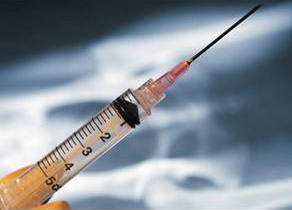
That’s why it’s used in anesthesia. It helps doctors get those breathing tubes down the throat easier during surgeries. It’s an effective drug and fast acting, but it’s an agonizing death since the person remains wide awake while the drug is doing its job paralyzing all the muscles of the body.
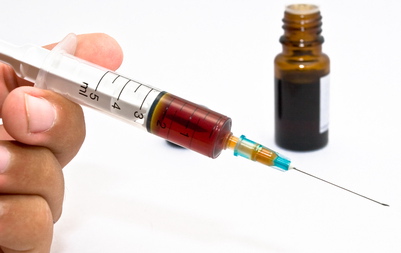
It’s a perfect murder weapon because it metabolizes (gets broken down by the body) almost immediately into the byproducts succinic acid and choline, both of which are normal to the body.

And at autopsy, minutely elevated levels of these chemicals are the only evidence of the crime, and toxicologists and medical examiners would easily overlook the slightly abnormal blood chemistry. It would be a difficult to prove murder without corroborating evidence linking the actual injection to the perpetrator.

The second drug that could make the perfect murder weapon is potassium chloride. This drug specifically is used to treat patients with extremely low levels dreamstime_xs_2932007of potassium. And, when given, the drug simply is metabolized into the components potassium and chloride, both of which are normally in the body.

An overdose of injected potassium causes severe heart arrhythmias and mimics a heart attack.  In a matter of minutes, the heart spasms and then simply stops functioning in what’s called SCD (sudden cardiac death).

But what about those pesky elevated blood levels of potassium? Not a problem! Whenever any muscle tissue is damaged (and the heart is muscle tissue), unusually large amounts of potassium are released into our blood.  So a medical examiner would likely list the cause of death as a fatal heart attack.

So today you have a BONUSNot one but two great drug choices to write about the perfect murder.  Is it any wonder that the prison system uses both of these drugs in the trio cocktail mix used in lethal injections? Happy writing as you plot the next perfect crime.

Thoughts?  Comments?  I’d love to hear them.

Posted in About James J. Murray, About Medications/Pharmacy, Drugs Used For Murder, Pharmacy/Pharmaceuticals | Tagged , , , , , , , , , , , , , , , , , , , , , , , , , | 26 Comments